AP 10th Class Life Processes Solutions — పదో తరగతి జీవశాస్త్రం జీవ ప్రక్రియలు పాఠంలోని అన్ని పాఠ్యపుస్తకం ప్రశ్నలకు జవాబులు. 21 In-text ప్రశ్నలు, 13 అభ్యాస ప్రశ్నలు, పరీక్షకు ముఖ్యమైన 1, 2, 4 మార్కుల ప్రశ్నలు, 10 ప్రశ్నల క్విజ్ ఒకే పేజీలో ఉన్నాయి.
ప్రతి జవాబు పరీక్షలో రాసే విధంగా ఇంగ్లీష్లో, కింద తెలుగు వివరణతో ఉంటుంది. జీర్ణ రసాలు, శ్వాసక్రియ రకాలు, దారువు, పోషక కణజాలం తేడాలు పట్టికలుగా, గ్లూకోజ్ విచ్ఛిన్న మార్గాలు చార్ట్గా ఇచ్చాం. భౌతిక శాస్త్రం జవాబుల సిరీస్ AP 10th Class Physical Science Solutions నుంచి మొదలవుతుంది.
జీవశాస్త్రం తర్వాతి పాఠాల జవాబులు వచ్చిన వెంటనే లింక్ రావాలంటే WhatsApp గ్రూప్లో చేరండి
ఈ పేజీలో: పాఠంలో ఏముంది | పోషణ, జీర్ణ రసాలు | శ్వాసక్రియ | రవాణా, విసర్జన | In-text ప్రశ్నలు | అభ్యాస ప్రశ్నలు 1-13 | ముఖ్య ప్రశ్నలు | క్విజ్ | మార్కులు పోయే చోట్లు | FAQs
AP 10th Class Life Processes Solutions — పాఠంలో ఏముంది
AP SCERT నెలవారీ సిలబస్ ప్రకారం జీవ ప్రక్రియలు జూన్, జూలై రెండు నెలలు బోధించే పెద్ద పాఠం. పదో తరగతి జీవశాస్త్రంలో ఇదే మొదటి పాఠం, SA1 సిలబస్లో ఉంది. జీర్ణవ్యవస్థ, గుండె, నెఫ్రాన్ చిత్రాలు, కిరణజన్య సంయోగక్రియ, శ్వాసక్రియ తేడాలు ఈ పాఠం నుంచి ఎక్కువగా అడుగుతారు.
| జీవ ప్రక్రియ | ముఖ్య విషయాలు |
|---|---|
| పోషణ (Nutrition) | స్వయంపోషణ, కిరణజన్య సంయోగక్రియ, పరపోషణ, మానవ జీర్ణవ్యవస్థ |
| శ్వాసక్రియ (Respiration) | వాయుసహిత, అవాయు శ్వాసక్రియ, మానవ శ్వాసవ్యవస్థ, వాయుగోణులు (alveoli) |
| రవాణా (Transportation) | రక్తం, గుండె, ద్వంద్వ ప్రసరణ, శోషరసం, మొక్కల్లో దారువు, పోషక కణజాలం |
| విసర్జన (Excretion) | మూత్రపిండాలు, నెఫ్రాన్, మొక్కల్లో విసర్జన |
ఈ పాఠంలోని అన్ని చిత్రాలు పేర్లతో సహా 10th Class Biology Important Diagrams in Telugu లో ఉన్నాయి.
పోషణ — జీర్ణ రసాలు, వాటి పనులు
కిరణజన్య సంయోగక్రియ: 6CO2 + 12H2O → C6H12O6 + 6O2 + 6H2O (సూర్యకాంతి, పత్రహరితం సమక్షంలో). దీనిలో మూడు దశలు: పత్రహరితం కాంతి శక్తిని గ్రహించడం, ఆ శక్తితో నీటి అణువులు విడిపోవడం, CO2 కార్బోహైడ్రేట్గా క్షయకరణం చెందడం.
| గ్రంథి / భాగం | రసం, ఎంజైమ్ | పని |
|---|---|---|
| లాలాజల గ్రంథులు (నోరు) | లాలాజలం: సాలివరీ అమైలేజ్ | పిండిపదార్థాన్ని చక్కెరగా మారుస్తుంది |
| జఠర గ్రంథులు (జీర్ణాశయం) | HCl, పెప్సిన్, శ్లేష్మం | ఆమ్ల మాధ్యమం ఇస్తుంది, ప్రోటీన్ల జీర్ణం మొదలు, శ్లేష్మం గోడను కాపాడుతుంది |
| కాలేయం | పైత్యరసం (bile) | ఆహారాన్ని క్షారయుతం చేస్తుంది, కొవ్వులను చిన్న బిందువులుగా మారుస్తుంది (emulsification) |
| క్లోమం (pancreas) | ట్రిప్సిన్, లైపేజ్ | ప్రోటీన్లు, కొవ్వుల జీర్ణం |
| చిన్న ప్రేగు గోడ | ఆంత్రరసం | ప్రోటీన్లను అమైనో ఆమ్లాలుగా, కార్బోహైడ్రేట్లను గ్లూకోజ్గా, కొవ్వులను ఫ్యాటీ ఆమ్లాలు, గ్లిసరాల్గా మారుస్తుంది |
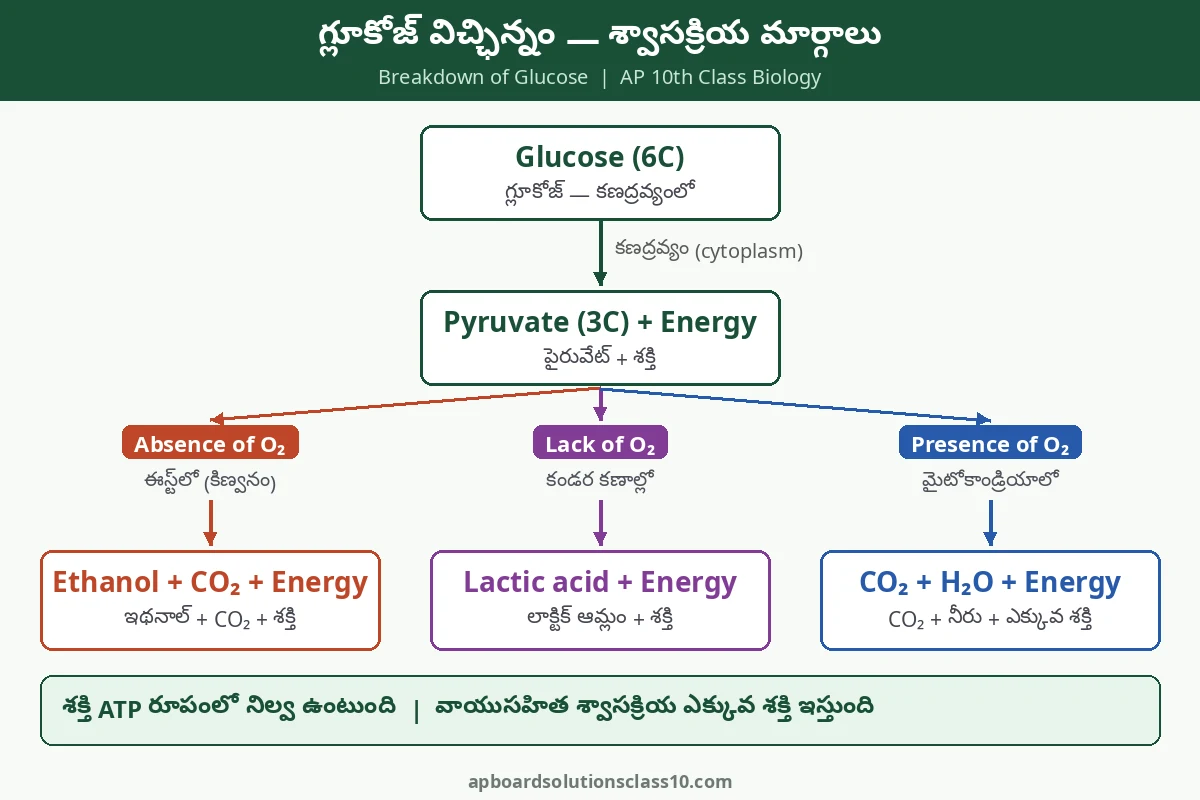
శ్వాసక్రియ — గ్లూకోజ్ విచ్ఛిన్న మార్గాలు
| అంశం | వాయుసహిత (Aerobic) | అవాయు (Anaerobic) |
|---|---|---|
| ఆక్సిజన్ | అవసరం | అవసరం లేదు |
| జరిగే చోటు | కణద్రవ్యం, తర్వాత మైటోకాండ్రియా | కణద్రవ్యం మాత్రమే |
| చివరి ఉత్పన్నాలు | CO2, నీరు | ఈస్ట్లో ఇథనాల్ + CO2; కండరాల్లో లాక్టిక్ ఆమ్లం |
| విడుదలయ్యే శక్తి | చాలా ఎక్కువ | తక్కువ |
శక్తి ATP రూపంలో నిల్వ ఉంటుంది. గ్లూకోజ్ మొదట కణద్రవ్యంలో పైరువేట్ (మూడు కార్బన్ల అణువు) గా విడిపోతుంది. ఆ తర్వాత మార్గం ఆక్సిజన్ ఉందా లేదా అనే దానిపై ఆధారపడుతుంది.
రవాణా, విసర్జన — ముఖ్య తేడాలు
| అంశం | దారువు (Xylem) | పోషక కణజాలం (Phloem) |
|---|---|---|
| రవాణా చేసేవి | నీరు, ఖనిజ లవణాలు | ఆహారం (చక్కెర, అమైనో ఆమ్లాలు) |
| దిశ | వేరు నుంచి పైకి మాత్రమే | పైకి, కిందకు రెండు దిశల్లో |
| శక్తి | బాష్పోత్సేకం లాగుడు బలం, ATP అవసరం లేదు | ATP శక్తి వాడుకుంటుంది |
| రక్తనాళం | రక్తం దిశ | గోడ |
|---|---|---|
| ధమని (Artery) | గుండె నుంచి శరీర భాగాలకు | మందంగా, సాగే గుణంతో |
| సిర (Vein) | శరీర భాగాల నుంచి గుండెకు | పలుచగా, కవాటాలు ఉంటాయి |
| రక్తకేశనాళిక (Capillary) | ధమని, సిరల మధ్య | ఒకే కణం మందం |
AP 10th Class Life Processes Solutions — In-text Questions
పాఠం మధ్యలో వచ్చే 21 ప్రశ్నలు. జవాబు చూడండి బటన్ నొక్కితే జవాబు కనిపిస్తుంది.
1. Why is diffusion insufficient to meet the oxygen requirements of multi-cellular organisms like humans?
జవాబు చూడండి
తెలుగులో: శరీరం పెద్దది, కణాలన్నీ గాలిని నేరుగా తాకవు; వ్యాపనం నెమ్మదిగా జరుగుతుంది.
2. What criteria do we use to decide whether something is alive?
జవాబు చూడండి
3. What are outside raw materials used for by an organism?
జవాబు చూడండి
4. What processes would you consider essential for maintaining life?
జవాబు చూడండి
తెలుగులో: పోషణ, శ్వాసక్రియ, రవాణా, విసర్జన.
5. What are the differences between autotrophic nutrition and heterotrophic nutrition?
జవాబు చూడండి
(2) Autotrophs need chlorophyll and sunlight; heterotrophs do not.
(3) Examples: green plants (autotrophs); animals, fungi (heterotrophs).
తెలుగులో: స్వయంపోషకాలు తమ ఆహారం తామే తయారుచేసుకుంటాయి; పరపోషకాలు ఇతర జీవులపై ఆధారపడతాయి.
6. Where do plants get each of the raw materials required for photosynthesis?
జవాబు చూడండి
7. What is the role of the acid in our stomach?
జవాబు చూడండి
తెలుగులో: HCl పెప్సిన్ పనిచేయడానికి ఆమ్ల మాధ్యమం ఇస్తుంది, సూక్ష్మజీవులను చంపుతుంది.
8. What is the function of digestive enzymes?
జవాబు చూడండి
9. How is the small intestine designed to absorb digested food?
జవాబు చూడండి
తెలుగులో: సూక్ష్మచూషకాలు (villi) ఉపరితల వైశాల్యాన్ని పెంచుతాయి, వాటిలో రక్తనాళాలు ఎక్కువ.
10. What advantage over an aquatic organism does a terrestrial organism have with regard to obtaining oxygen for respiration?
జవాబు చూడండి
11. What are the different ways in which glucose is oxidised to provide energy in various organisms?
జవాబు చూడండి
(1) In the absence of oxygen (yeast): pyruvate → ethanol + CO2 + energy (fermentation).
(2) In lack of oxygen (our muscle cells): pyruvate → lactic acid + energy.
(3) In the presence of oxygen (mitochondria): pyruvate → CO2 + H2O + a large amount of energy.
తెలుగులో: పైన ఉన్న చార్ట్లో ఈ మూడు మార్గాలు చూపించాం.
12. How are oxygen and carbon dioxide transported in human beings?
జవాబు చూడండి
13. How are the lungs designed in human beings to maximise the area for exchange of gases?
జవాబు చూడండి
తెలుగులో: వాయుగోణులు ఉపరితల వైశాల్యాన్ని చాలా పెంచుతాయి.
14. What are the components of the transport system in human beings? What are the functions of these components?
జవాబు చూడండి
(2) Blood vessels: arteries carry blood away from the heart, veins bring blood back to the heart, capillaries exchange materials with cells.
(3) Blood: plasma carries food, CO2 and wastes; RBCs carry oxygen; WBCs fight infection; platelets help clotting.
(4) Lymph: carries digested fats and drains excess fluid from tissues back into the blood.
15. Why is it necessary to separate oxygenated and deoxygenated blood in mammals and birds?
జవాబు చూడండి
తెలుగులో: ఎక్కువ శక్తి అవసరం కాబట్టి ఆక్సిజన్ సరఫరా సమర్థంగా ఉండాలి.
16. What are the components of the transport system in highly organised plants?
జవాబు చూడండి
17. How are water and minerals transported in plants?
జవాబు చూడండి
తెలుగులో: బాష్పోత్సేకం వల్ల కలిగే లాగుడు బలం నీటిని పైకి లాగుతుంది.
18. How is food transported in plants?
జవాబు చూడండి
19. Describe the structure and functioning of nephrons.
జవాబు చూడండి
Functioning: blood is filtered in the glomerulus, and the filtrate enters the tubule. As it passes along the tubule, useful substances such as glucose, amino acids, salts and much of the water are reabsorbed into the blood. The remaining fluid becomes urine, which goes to the collecting duct.
తెలుగులో: నెఫ్రాన్ మూత్రపిండం యొక్క నిర్మాణాత్మక, క్రియాత్మక ప్రమాణం. వడపోత, పునఃశోషణం రెండూ రాయాలి.
20. What are the methods used by plants to get rid of excretory products?
జవాబు చూడండి
21. How is the amount of urine produced regulated?
జవాబు చూడండి
AP 10th Class Life Processes Solutions — Exercise Questions and Answers
పాఠం చివరి 13 అభ్యాస ప్రశ్నలు. 1 నుంచి 4 బహుళైచ్ఛిక ప్రశ్నలు.
1. The kidneys in human beings are a part of the system for (a) nutrition (b) respiration (c) excretion (d) transportation
జవాబు చూడండి
2. The xylem in plants are responsible for (a) transport of water (b) transport of food (c) transport of amino acids (d) transport of oxygen
జవాబు చూడండి
3. The autotrophic mode of nutrition requires (a) carbon dioxide and water (b) chlorophyll (c) sunlight (d) all of the above
జవాబు చూడండి
4. The breakdown of pyruvate to give carbon dioxide, water and energy takes place in (a) cytoplasm (b) mitochondria (c) chloroplast (d) nucleus
జవాబు చూడండి
5. How are fats digested in our bodies? Where does this process take place?
జవాబు చూడండి
తెలుగులో: పైత్యరసం కొవ్వులను చిన్న బిందువులుగా మారుస్తుంది, లైపేజ్ వాటిని జీర్ణం చేస్తుంది.
6. What is the role of saliva in the digestion of food?
జవాబు చూడండి
7. What are the necessary conditions for autotrophic nutrition and what are its by-products?
జవాబు చూడండి
By-products: oxygen (released into the air) and water. The main product, glucose, is converted to starch and stored.
8. What are the differences between aerobic and anaerobic respiration? Name some organisms that use the anaerobic mode of respiration.
జవాబు చూడండి
(2) Aerobic respiration takes place in the cytoplasm and mitochondria; anaerobic only in the cytoplasm.
(3) Aerobic end products are CO2 and water; anaerobic end products are ethanol and CO2 (yeast) or lactic acid (muscles).
(4) Aerobic respiration releases much more energy.
Organisms: yeast, some bacteria, parasitic worms such as tapeworm; our muscle cells during heavy exercise.
9. How are the alveoli designed to maximise the exchange of gases?
జవాబు చూడండి
10. What would be the consequences of a deficiency of haemoglobin in our bodies?
జవాబు చూడండి
తెలుగులో: హిమోగ్లోబిన్ తగ్గితే రక్తహీనత (anaemia) వస్తుంది.
11. Describe double circulation of blood in human beings. Why is it necessary?
జవాబు చూడండి
(1) Pulmonary circulation: deoxygenated blood from the body enters the right atrium, goes to the right ventricle and is pumped to the lungs, where it takes up oxygen; oxygenated blood returns to the left atrium.
(2) Systemic circulation: from the left atrium blood goes to the left ventricle, which pumps it to all parts of the body; deoxygenated blood returns to the right atrium.
Necessity: it keeps oxygenated and deoxygenated blood separate, giving an efficient oxygen supply needed for the high energy needs of the body.
తెలుగులో: గుండె గదుల క్రమం: కుడి కర్ణిక, కుడి జఠరిక, ఊపిరితిత్తులు, ఎడమ కర్ణిక, ఎడమ జఠరిక, శరీరం.
12. What are the differences between the transport of materials in xylem and phloem?
జవాబు చూడండి
(2) Xylem transport is only upward (roots to leaves); phloem transport is both upward and downward.
(3) Xylem transport is mainly due to transpiration pull and does not use ATP; phloem transport uses energy from ATP.
13. Compare the functioning of alveoli in the lungs and nephrons in the kidneys with respect to their structure and functioning.
జవాబు చూడండి
Function: alveoli exchange gases (oxygen enters the blood, CO2 leaves) by diffusion; nephrons filter the blood and reabsorb useful substances, forming urine.
Similarity: both have a very large surface area, thin walls and close contact with blood capillaries.
10th Class Life Processes Important Questions
పాఠ్యపుస్తకం ప్రశ్నలు కాకుండా, పరీక్షల్లో తరచూ వచ్చే రూపంలో మేము తయారు చేసిన ప్రశ్నలు.
1 మార్కు ప్రశ్నలు
1. Name the enzyme present in saliva.
జవాబు చూడండి
2. What is the structural and functional unit of the kidney?
జవాబు చూడండి
3. In which cell organelle does photosynthesis take place?
జవాబు చూడండి
4. Which blood vessel carries oxygenated blood from the heart to the body?
జవాబు చూడండి
2 మార్కుల ప్రశ్నలు
1. Write the balanced equation for photosynthesis.
జవాబు చూడండి
2. Why do ventricles have thicker muscular walls than atria?
జవాబు చూడండి
3. What is transpiration? Write its two uses.
జవాబు చూడండి
4. Write two differences between arteries and veins.
జవాబు చూడండి
4 మార్కుల ప్రశ్నలు
1. Draw a neat labelled diagram of the human alimentary canal and write the functions of any three parts.
జవాబు చూడండి
Functions: (1) Mouth: chewing and salivary amylase digests starch. (2) Stomach: HCl, pepsin and mucus; protein digestion begins. (3) Small intestine: complete digestion of carbohydrates, proteins and fats; absorption through villi. (4) Large intestine: absorbs water from undigested food.
తెలుగులో: చిత్రంలో కనీసం 6 భాగాలకు పేర్లు రాయాలి. చిత్రాల కోసం పైన ఇచ్చిన Diagrams లింక్ చూడండి.
2. Describe an experiment to show that carbon dioxide is essential for photosynthesis.
జవాబు చూడండి
Observation: the leaf from the plant with KOH does not turn blue-black; the other leaf turns blue-black.
Conclusion: carbon dioxide is essential for photosynthesis.
3. Draw a labelled diagram of the human excretory system and explain how urine is formed.
జవాబు చూడండి
Urine formation: blood enters the kidney through the renal artery and is filtered in the glomerulus of each nephron. The filtrate passes through the tubule, where glucose, amino acids, salts and water are reabsorbed. The remaining fluid (urine) flows into the collecting duct, through the ureter into the urinary bladder, and is passed out through the urethra.
4. Explain the structure of the human heart with a labelled diagram.
జవాబు చూడండి
Life Processes క్విజ్ — 10 ప్రశ్నలు
జవాబు చూసి, మీది సరైతేనే టిక్ పెట్టండి. కింది బార్లో 10 కి మీ స్కోర్ కనిపిస్తుంది.
1. Kidneys are part of the system for:
(A) nutrition (B) respiration (C) excretion (D) transportation [1 మార్కు]
జవాబు చూడండి
2. Xylem transports:
(A) water (B) food (C) amino acids (D) oxygen [1 మార్కు]
జవాబు చూడండి
3. Pyruvate breaks into CO2, water and energy in the:
(A) cytoplasm (B) mitochondria (C) chloroplast (D) nucleus [1 మార్కు]
జవాబు చూడండి
4. The enzyme in saliva is:
(A) pepsin (B) trypsin (C) salivary amylase (D) lipase [1 మార్కు]
జవాబు చూడండి
5. Bile is produced by the:
(A) pancreas (B) liver (C) stomach (D) gall bladder [1 మార్కు]
జవాబు చూడండి
6. Lactic acid is formed in muscles due to:
(A) excess oxygen (B) lack of oxygen (C) excess glucose (D) excess water [1 మార్కు]
జవాబు చూడండి
7. The functional unit of the kidney is:
(A) neuron (B) nephron (C) alveolus (D) villus [1 మార్కు]
జవాబు చూడండి
8. Transport of food in plants is called:
(A) transpiration (B) translocation (C) respiration (D) diffusion [1 మార్కు]
జవాబు చూడండి
9. Deficiency of haemoglobin causes:
(A) diabetes (B) anaemia (C) goitre (D) scurvy [1 మార్కు]
జవాబు చూడండి
10. Gas exchange in the lungs takes place in the:
(A) trachea (B) bronchi (C) alveoli (D) diaphragm [1 మార్కు]
జవాబు చూడండి
ఈ పాఠంలో మార్కులు ఎక్కడ పోతాయి
- కిరణజన్య సంయోగక్రియ సమీకరణాన్ని తుల్యం చేయకపోవడం, సూర్యకాంతి, పత్రహరితం గుర్తులు రాయకపోవడం.
- పైత్యరసంలో ఎంజైమ్ ఉందని రాయడం. పైత్యరసంలో ఎంజైమ్ ఉండదు, కొవ్వులను చిన్న బిందువులుగా మాత్రమే మారుస్తుంది.
- ద్వంద్వ ప్రసరణలో గుండె గదుల క్రమం తారుమారు చేయడం (కుడి వైపు అశుద్ధ రక్తం, ఎడమ వైపు శుద్ధ రక్తం).
- దారువు రెండు దిశల్లో రవాణా చేస్తుందని రాయడం. రెండు దిశల్లో రవాణా పోషక కణజాలం (phloem) మాత్రమే.
- జీర్ణవ్యవస్థ, గుండె, నెఫ్రాన్ చిత్రాల్లో భాగాల పేర్లు రాయకపోవడం. చిత్రానికి పేర్లు లేకపోతే సగం మార్కులు పోతాయి.
తర్వాత ఏం చదవాలి
- AP 10th Class SA1 Biology Question Paper 2026-27 — ఈ పాఠం ఉన్న SA1 సాధన పేపర్
- 10th Class Biology Important Diagrams in Telugu — అన్ని చిత్రాలు పేర్లతో
- AP 10th Class Biology Blueprint 2027 — ఏ పాఠానికి ఎన్ని మార్కులు
- AP 10th Class Biology Mission March 2027 Slip Tests — స్లిప్ టెస్టులు
FAQs
AP 10th Class Life Processes పాఠం ఏ నెలలో చెబుతారు?
AP SCERT నెలవారీ సిలబస్ ప్రకారం జూన్, జూలైలో. పదో తరగతి జీవశాస్త్రంలో ఇదే మొదటి పాఠం.
ఈ పాఠంలో ఎన్ని ప్రశ్నలు ఉన్నాయి?
పాఠం చివర 13 అభ్యాస ప్రశ్నలు, పాఠం మధ్యలో 21 In-text ప్రశ్నలు. అన్నింటికీ జవాబులు ఈ పేజీలో ఉన్నాయి.
జీవ ప్రక్రియలు అంటే ఏమిటి?
జీవిని బతికి ఉంచడానికి నిరంతరం జరిగే పనులు: పోషణ, శ్వాసక్రియ, రవాణా, విసర్జన.
వాయుసహిత, అవాయు శ్వాసక్రియల తేడా ఏమిటి?
వాయుసహితానికి ఆక్సిజన్ కావాలి, మైటోకాండ్రియాలో జరిగి ఎక్కువ శక్తి ఇస్తుంది. అవాయుకు ఆక్సిజన్ అవసరం లేదు, కణద్రవ్యంలో జరిగి తక్కువ శక్తి ఇస్తుంది.
ద్వంద్వ ప్రసరణ అంటే ఏమిటి?
ఒక పూర్తి చక్రంలో రక్తం గుండె గుండా రెండుసార్లు ప్రవహించడం: ఒకసారి ఊపిరితిత్తులకు, ఒకసారి శరీరానికి.
నెఫ్రాన్ పని ఏమిటి?
రక్తాన్ని వడపోసి, ఉపయోగపడే పదార్థాలను తిరిగి గ్రహించి, మిగిలిన వ్యర్థాలను మూత్రంగా మార్చడం.
ఈ పాఠంలో ఏ చిత్రాలు ముఖ్యం?
జీర్ణవ్యవస్థ, మానవ గుండె, శ్వాసవ్యవస్థ, నెఫ్రాన్, విసర్జక వ్యవస్థ, పత్రరంధ్రం (stomata).
ఈ జవాబులు తెలుగు మీడియం విద్యార్థులకు పనికొస్తాయా?
అవును. ప్రతి ముఖ్య జవాబు కింద తెలుగు వివరణ ఉంది. పట్టికలు, FAQs తెలుగులోనే ఉన్నాయి.
SA1 లో ఈ పాఠం వస్తుందా?
అవును, జీవ ప్రక్రియలు SA1 సిలబస్లో ఉంది. AP 10th Class SA1 Biology Question Paper లో సాధన చేయండి.
తర్వాతి పాఠం జవాబులు ఎప్పుడు?
తర్వాత Control and Coordination (నియంత్రణ, సమన్వయం) పాఠం జవాబుల పేజీ వస్తుంది.
Official Sources
పాఠాల క్రమం, నెలవారీ ప్రణాళిక: AP SCERT 2026-27 నెలవారీ సిలబస్, పాఠశాల విద్యాశాఖ ఆంధ్రప్రదేశ్. పాఠ్యపుస్తకాలు పాఠశాల విద్యాశాఖ సైట్లో లభిస్తాయి. జవాబులు మా సొంత మాటల్లో రాశాం.