AP 10th Class Human Eye and Colourful World Solutions — పదో తరగతి భౌతిక శాస్త్రం మానవ నేత్రం, రంగుల ప్రపంచం పాఠంలోని అన్ని పాఠ్యపుస్తకం ప్రశ్నలకు జవాబులు. 4 In-text ప్రశ్నలు, 13 అభ్యాస ప్రశ్నలు, పరీక్షకు ముఖ్యమైన 1, 2, 4 మార్కుల ప్రశ్నలు, 10 ప్రశ్నల క్విజ్ ఒకే పేజీలో ఉన్నాయి.
ప్రతి జవాబు పరీక్షలో రాసే విధంగా ఇంగ్లీష్లో, కింద తెలుగు వివరణతో ఉంటుంది. కంటి భాగాలు, దృష్టి దోషాలు, ప్రకృతిలో కాంతి దృగ్విషయాలు పట్టికలుగా, దృష్టి దోషాల చార్ట్గా ఇచ్చాం. ముందు పాఠం జవాబులు Light Reflection and Refraction Solutions లో ఉన్నాయి.
తర్వాతి Physics పాఠాల జవాబులు వచ్చిన వెంటనే లింక్ రావాలంటే WhatsApp గ్రూప్లో చేరండి
ఈ పేజీలో: పాఠంలో ఏముంది | కంటి భాగాలు | దృష్టి దోషాలు | ప్రకృతిలో కాంతి | In-text ప్రశ్నలు | అభ్యాస ప్రశ్నలు 1-13 | ముఖ్య ప్రశ్నలు | క్విజ్ | మార్కులు పోయే చోట్లు | FAQs
AP 10th Class Human Eye and Colourful World Solutions — పాఠంలో ఏముంది
AP SCERT ఉపాధ్యాయ కరదీపిక ప్రకారం ఈ పాఠం ఆగస్టులో చెబుతారు. దృష్టి దోషాల కిరణ చిత్రాలు, సవరణ కటకం సామర్థ్యం లెక్కలు, నక్షత్రాలు మినుకుమినుకుమనడం, ఆకాశం నీలి రంగు వంటి కారణాలు చెప్పే ప్రశ్నలు ఈ పాఠం నుంచి ఎక్కువగా అడుగుతారు.
| అంశం | ముఖ్య విషయాలు |
|---|---|
| మానవ నేత్రం | కంటి భాగాలు, సర్దుబాటు సామర్థ్యం (accommodation), సమీప బిందువు, దూర బిందువు |
| దృష్టి దోషాలు | హ్రస్వ దృష్టి, దీర్ఘ దృష్టి, చత్వారం, వాటి సవరణ |
| పట్టకం | పట్టకం ద్వారా వక్రీభవనం, విచలన కోణం, వర్ణ విక్షేపణం, ఇంద్రధనుస్సు |
| వాతావరణంలో కాంతి | వాతావరణ వక్రీభవనం, కాంతి పరిక్షేపణం, టిండాల్ ప్రభావం, ఆకాశం నీలి రంగు |
ఈ పాఠంపై స్లిప్ టెస్ట్ కోసం AP 10th Class Physical Science Human Eye Slip Test PDF చూడండి.
మానవ నేత్రం — భాగాలు, పనులు
| భాగం | తెలుగు పేరు | పని |
|---|---|---|
| Cornea | కార్నియా | కాంతి కంటిలోకి ప్రవేశించే పారదర్శక పొర. ఎక్కువ వక్రీభవనం ఇక్కడే జరుగుతుంది. |
| Iris | కనుపాప | తారక పరిమాణాన్ని మార్చి లోపలికి వెళ్లే కాంతిని నియంత్రిస్తుంది. |
| Pupil | తారక | కాంతి లోపలికి వెళ్లే రంధ్రం. |
| Eye lens | కంటి కటకం | కుంభాకార కటకం. రెటీనాపై తలకిందుల నిజ ప్రతిబింబం ఏర్పరుస్తుంది. |
| Ciliary muscles | సిలియరీ కండరాలు | కటకం వక్రత మార్చి నాభ్యంతరాన్ని సర్దుబాటు చేస్తాయి. |
| Retina | రెటీనా (దృష్టిపటలం) | ప్రతిబింబం ఏర్పడే తెర. కాంతి సంకేతాలను దృష్టి నాడి ద్వారా మెదడుకు పంపుతుంది. |
సాధారణ కంటికి సమీప బిందువు 25 సెం.మీ. (స్పష్ట దృష్టి కనిష్ఠ దూరం), దూర బిందువు అనంతం.
దృష్టి దోషాలు, సవరణ
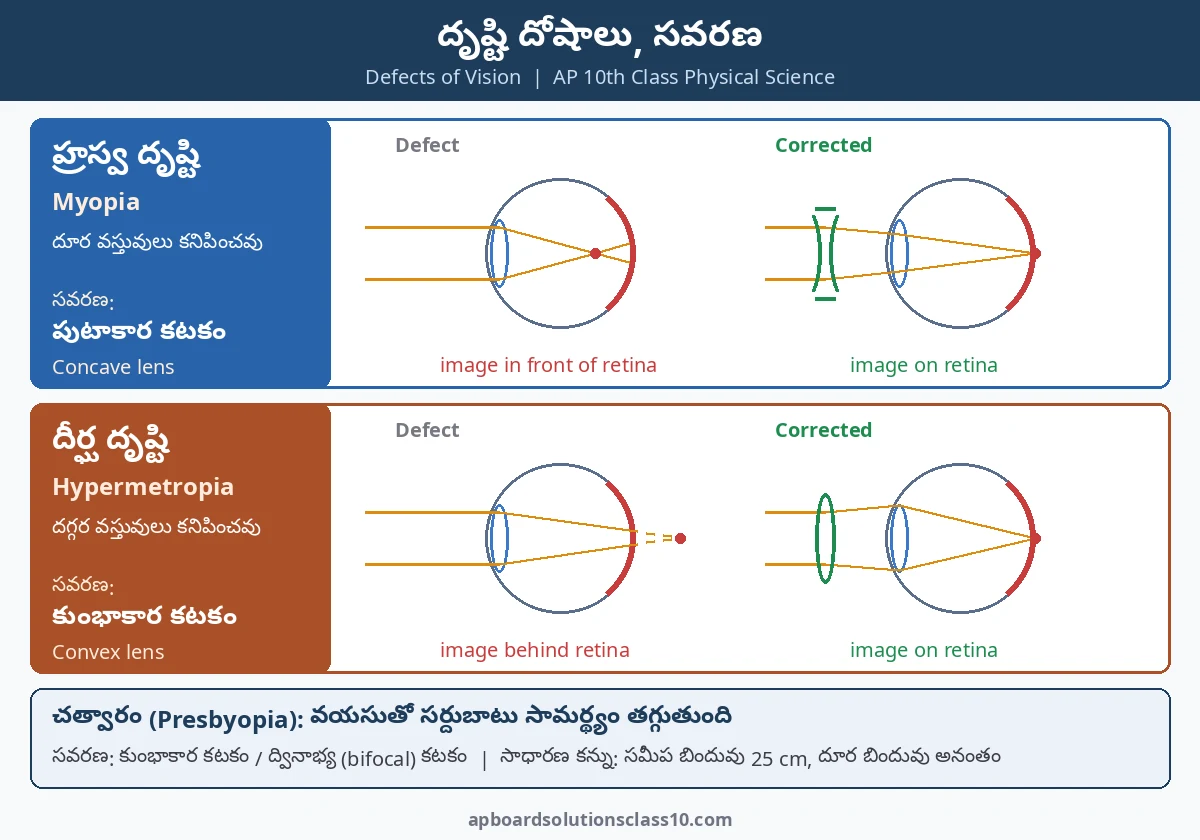
| దోషం | కారణం, లక్షణం | సవరణ |
|---|---|---|
| హ్రస్వ దృష్టి (Myopia) | దగ్గర వస్తువులు కనిపిస్తాయి, దూరంవి కనిపించవు. ప్రతిబింబం రెటీనా ముందు ఏర్పడుతుంది. కటకం వక్రత ఎక్కువ లేదా కనుగుడ్డు పొడవు ఎక్కువ. | తగిన సామర్థ్యం ఉన్న పుటాకార కటకం |
| దీర్ఘ దృష్టి (Hypermetropia) | దూర వస్తువులు కనిపిస్తాయి, దగ్గరవి కనిపించవు. ప్రతిబింబం రెటీనా వెనుక ఏర్పడుతుంది. నాభ్యంతరం ఎక్కువ లేదా కనుగుడ్డు చిన్నది. | తగిన సామర్థ్యం ఉన్న కుంభాకార కటకం |
| చత్వారం (Presbyopia) | వయసుతో సిలియరీ కండరాలు బలహీనపడి సర్దుబాటు సామర్థ్యం తగ్గుతుంది. సమీప బిందువు దూరం జరుగుతుంది. | కుంభాకార కటకం; రెండు దోషాలు ఉంటే ద్వినాభ్య (bifocal) కటకం |
ప్రకృతిలో కాంతి దృగ్విషయాలు — కారణాలు
| దృగ్విషయం | కారణం |
|---|---|
| ఇంద్రధనుస్సు | వర్షపు బిందువుల్లో కాంతి వక్రీభవనం, విక్షేపణం, అంతర పరావర్తనం |
| నక్షత్రాలు మినుకుమినుకుమనడం | వాతావరణ వక్రీభవనం (నక్షత్రం బిందు మూలం) |
| సూర్యోదయం ముందే, సూర్యాస్తమయం ఆలస్యంగా కనిపించడం | వాతావరణ వక్రీభవనం (సుమారు 2 నిమిషాలు) |
| ఆకాశం నీలి రంగు | గాలి అణువులు నీలి కాంతిని ఎక్కువగా పరిక్షేపణం చేయడం |
| ఉదయం, సాయంత్రం సూర్యుడు ఎరుపు | కాంతి ఎక్కువ దూరం ప్రయాణించి నీలి రంగు పరిక్షేపణం చెంది పోవడం |
| అడవిలో సూర్యకిరణాల దారి కనిపించడం | టిండాల్ ప్రభావం (కొల్లాయిడ్ కణాల వల్ల పరిక్షేపణం) |
AP 10th Class Human Eye and Colourful World Solutions — In-text Questions
పాఠం మధ్యలో వచ్చే 4 ప్రశ్నలు. జవాబు చూడండి బటన్ నొక్కితే జవాబు కనిపిస్తుంది.
1. What is meant by power of accommodation of the eye?
జవాబు చూడండి
తెలుగులో: దగ్గర, దూర వస్తువులు రెండూ స్పష్టంగా కనిపించేలా కంటి కటకం నాభ్యంతరం మార్చుకునే సామర్థ్యం.
2. A person with a myopic eye cannot see objects beyond 1.2 m distinctly. What should be the type of the corrective lens used to restore proper vision?
జవాబు చూడండి
f = −1.2 m, P = 1/f = −0.83 D.
తెలుగులో: హ్రస్వ దృష్టికి పుటాకార కటకం వాడాలి.
3. What is the far point and near point of the human eye with normal vision?
జవాబు చూడండి
Near point: about 25 cm from the eye (least distance of distinct vision).
4. A student has difficulty reading the blackboard while sitting in the last row. What could be the defect the child is suffering from? How can it be corrected?
జవాబు చూడండి
తెలుగులో: దూరంలో ఉన్న బోర్డు కనిపించకపోవడం హ్రస్వ దృష్టి. పుటాకార కటకం ఉన్న కళ్లద్దాలు వాడాలి.
AP 10th Class Human Eye and Colourful World Solutions — Exercise Questions and Answers
పాఠం చివరి 13 అభ్యాస ప్రశ్నలు. 1 నుంచి 4 బహుళైచ్ఛిక ప్రశ్నలు.
1. The human eye can focus on objects at different distances by adjusting the focal length of the eye lens. This is due to (a) presbyopia (b) accommodation (c) near-sightedness (d) far-sightedness
జవాబు చూడండి
2. The human eye forms the image of an object at its (a) cornea (b) iris (c) pupil (d) retina
జవాబు చూడండి
3. The least distance of distinct vision for a young adult with normal vision is about (a) 25 m (b) 2.5 cm (c) 25 cm (d) 2.5 m
జవాబు చూడండి
4. The change in focal length of an eye lens is caused by the action of the (a) pupil (b) retina (c) ciliary muscles (d) iris
జవాబు చూడండి
5. A person needs a lens of power −5.5 dioptres for correcting his distant vision. For correcting his near vision he needs a lens of power +1.5 dioptre. What is the focal length of the lens required for correcting (i) distant vision, and (ii) near vision?
జవాబు చూడండి
(ii) Near vision: f = 1/P = 1/1.5 = 0.667 m = +66.7 cm (convex lens).
తెలుగులో: P = 1/f లో f మీటర్లలో వస్తుంది. సెంటీమీటర్లలోకి మార్చడానికి 100 తో గుణించాలి.
6. The far point of a myopic person is 80 cm in front of the eye. What is the nature and power of the lens required to correct the problem?
జవాబు చూడండి
1/f = 1/v − 1/u = −1/80 − 0 ⇒ f = −80 cm = −0.8 m.
P = 1/f = 1/(−0.8) = −1.25 D.
A concave lens of power −1.25 D.
తెలుగులో: దూర బిందువు దూరమే పుటాకార కటకం నాభ్యంతరం అవుతుంది.
7. Make a diagram to show how hypermetropia is corrected. The near point of a hypermetropic eye is 1 m. What is the power of the lens required to correct this defect? Assume that the near point of the normal eye is 25 cm.
జవాబు చూడండి
u = −25 cm, v = −100 cm.
1/f = 1/v − 1/u = −1/100 + 1/25 = (−1 + 4)/100 = 3/100 ⇒ f = 33.3 cm = 0.333 m.
P = 1/f = +3.0 D.
Diagram: draw the eye with rays from a near object (N) meeting behind the retina. Then place a convex lens in front of the eye; the rays from N now appear to come from the defective near point N′ and meet exactly on the retina.
తెలుగులో: దీర్ఘ దృష్టికి కుంభాకార కటకం. చిత్రంలో కటకం లేకుండా ప్రతిబింబం రెటీనా వెనుక, కటకంతో రెటీనాపై చూపించాలి.
8. Why is a normal eye not able to see clearly the objects placed closer than 25 cm?
జవాబు చూడండి
తెలుగులో: సిలియరీ కండరాలు కటకం నాభ్యంతరాన్ని ఒక పరిమితి వరకే తగ్గించగలవు.
9. What happens to the image distance in the eye when we increase the distance of an object from the eye?
జవాబు చూడండి
తెలుగులో: ప్రతిబింబ దూరం (కటకం నుంచి రెటీనా వరకు) మారదు, కటకం నాభ్యంతరం మారుతుంది.
10. Why do stars twinkle?
జవాబు చూడండి
తెలుగులో: వాతావరణ వక్రీభవనం, నక్షత్రం బిందు మూలం కావడం ఈ రెండు కారణాలు రాయాలి.
11. Explain why the planets do not twinkle.
జవాబు చూడండి
తెలుగులో: గ్రహం విస్తృత మూలం, మార్పులు ఒకదానికొకటి రద్దు అవుతాయి.
12. Why does the Sun appear reddish early in the morning?
జవాబు చూడండి
తెలుగులో: ఎక్కువ దూరం ప్రయాణంలో నీలి కాంతి పరిక్షేపణం చెంది పోతుంది, ఎరుపు మాత్రమే చేరుతుంది.
13. Why does the sky appear dark instead of blue to an astronaut?
జవాబు చూడండి
తెలుగులో: అంతరిక్షంలో వాతావరణం లేదు, కాంతి పరిక్షేపణం జరగదు.
10th Class Human Eye and Colourful World Important Questions
పాఠ్యపుస్తకం ప్రశ్నలు కాకుండా, పరీక్షల్లో తరచూ వచ్చే రూపంలో మేము తయారు చేసిన ప్రశ్నలు.
1 మార్కు ప్రశ్నలు
1. What is dispersion of light?
జవాబు చూడండి
2. Which part of the eye controls the amount of light entering it?
జవాబు చూడండి
3. Which colour of white light bends the most when passing through a prism?
జవాబు చూడండి
4. Name the defect of vision that is corrected by a bifocal lens.
జవాబు చూడండి
2 మార్కుల ప్రశ్నలు
1. What is the Tyndall effect? Give an example.
జవాబు చూడండి
2. Why are danger signal lights red in colour?
జవాబు చూడండి
3. What is presbyopia? How is it corrected?
జవాబు చూడండి
4. Why does white light split into colours when it passes through a glass prism?
జవాబు చూడండి
4 మార్కుల ప్రశ్నలు
1. What is myopia? Write its causes. Draw ray diagrams of a myopic eye and its correction.
జవాబు చూడండి
Causes: (1) excessive curvature of the eye lens; (2) elongation of the eyeball.
Diagrams: (a) parallel rays from a distant object meeting in front of the retina; (b) a concave lens placed in front of the eye spreads the rays so that they appear to come from the far point, and they now meet on the retina.
తెలుగులో: కారణాలు రెండు, చిత్రాలు రెండు (దోషం, సవరణ) తప్పనిసరి.
2. Explain the formation of a rainbow with a diagram.
జవాబు చూడండి
Diagram: a raindrop with the incoming white ray, refraction at entry, internal reflection at the back, and red and violet rays leaving at different angles.
3. Describe an experiment to show refraction of light through a triangular glass prism. Label the angle of deviation.
జవాబు చూడండి
Observations: the ray bends towards the base of the prism at both faces. The angle between the incident ray produced forward and the emergent ray produced backward is the angle of deviation (D).
4. Explain advance sunrise and delayed sunset.
జవాబు చూడండి
తెలుగులో: సూర్యోదయం 2 నిమిషాలు ముందు, సూర్యాస్తమయం 2 నిమిషాలు ఆలస్యం. కారణం వాతావరణ వక్రీభవనం.
Human Eye and Colourful World క్విజ్ — 10 ప్రశ్నలు
జవాబు చూసి, మీది సరైతేనే టిక్ పెట్టండి. కింది బార్లో 10 కి మీ స్కోర్ కనిపిస్తుంది.
1. The image in the human eye is formed on the:
(A) cornea (B) iris (C) pupil (D) retina [1 మార్కు]
జవాబు చూడండి
2. The focal length of the eye lens is changed by the:
(A) pupil (B) retina (C) ciliary muscles (D) iris [1 మార్కు]
జవాబు చూడండి
3. Least distance of distinct vision for a normal eye:
(A) 25 m (B) 2.5 cm (C) 25 cm (D) 2.5 m [1 మార్కు]
జవాబు చూడండి
4. Myopia is corrected using a:
(A) convex lens (B) concave lens (C) plane mirror (D) prism [1 మార్కు]
జవాబు చూడండి
5. Hypermetropia is corrected using a:
(A) convex lens (B) concave lens (C) bifocal mirror (D) cylindrical lens [1 మార్కు]
జవాబు చూడండి
6. Which colour deviates the most in a prism?
(A) red (B) yellow (C) green (D) violet [1 మార్కు]
జవాబు చూడండి
7. The sky appears blue because of:
(A) reflection (B) dispersion (C) scattering (D) refraction [1 మార్కు]
జవాబు చూడండి
8. Stars twinkle due to:
(A) atmospheric refraction (B) total internal reflection (C) scattering (D) dispersion [1 మార్కు]
జవాబు చూడండి
9. Power of the lens needed when the far point of a myopic eye is 80 cm:
(A) +1.25 D (B) −1.25 D (C) +0.8 D (D) −0.8 D [1 మార్కు]
జవాబు చూడండి
10. Danger signals are red because red light is:
(A) scattered the most (B) scattered the least (C) absorbed by air (D) refracted the most [1 మార్కు]
జవాబు చూడండి
ఈ పాఠంలో మార్కులు ఎక్కడ పోతాయి
- హ్రస్వ దృష్టికి కుంభాకార కటకం అని రాయడం. హ్రస్వ దృష్టికి పుటాకారం, దీర్ఘ దృష్టికి కుంభాకారం.
- సామర్థ్యం లెక్కలో f ను సెంటీమీటర్లలోనే ఉంచడం. P = 1/f లో f మీటర్లలో ఉండాలి.
- దీర్ఘ దృష్టి లెక్కలో v = −100 cm (దోష కంటి సమీప బిందువు) పెట్టకుండా +100 పెట్టడం.
- నక్షత్రాలు మినుకుమినుకుమనడానికి కారణం పరిక్షేపణం అని రాయడం. సరైన కారణం వాతావరణ వక్రీభవనం.
- దృష్టి దోషాల చిత్రాల్లో దోషం ఉన్న కన్ను, సవరించిన కన్ను రెండూ గీయకపోవడం.
తర్వాత ఏం చదవాలి
- AP 10th Class Light Reflection and Refraction Solutions — కాంతి పాఠం జవాబులు
- AP 10th Class Physical Science Human Eye Slip Test PDF — ఈ పాఠంపై స్లిప్ టెస్ట్
- 10th Class Physics Formulas in Telugu — అన్ని Physics సూత్రాలు
- AP 10th Class SA1 Physical Science Question Paper 2026-27 — SA1 సాధన పేపర్
FAQs
AP 10th Class Human Eye and Colourful World పాఠం ఏ నెలలో చెబుతారు?
AP SCERT ఉపాధ్యాయ కరదీపిక ప్రకారం ఆగస్టులో. కాంతి – పరావర్తనం, వక్రీభవనం పాఠం తర్వాత వస్తుంది.
ఈ పాఠంలో ఎన్ని ప్రశ్నలు ఉన్నాయి?
పాఠం చివర 13 అభ్యాస ప్రశ్నలు, పాఠం మధ్యలో 4 In-text ప్రశ్నలు. అన్నింటికీ జవాబులు ఈ పేజీలో ఉన్నాయి.
సర్దుబాటు సామర్థ్యం అంటే ఏమిటి?
దగ్గర, దూర వస్తువులు రెండూ స్పష్టంగా కనిపించేలా కంటి కటకం తన నాభ్యంతరాన్ని మార్చుకునే సామర్థ్యం.
హ్రస్వ దృష్టి, దీర్ఘ దృష్టి తేడా ఏమిటి?
హ్రస్వ దృష్టిలో దూర వస్తువులు కనిపించవు, పుటాకార కటకంతో సవరిస్తారు. దీర్ఘ దృష్టిలో దగ్గర వస్తువులు కనిపించవు, కుంభాకార కటకంతో సవరిస్తారు.
నక్షత్రాలు ఎందుకు మినుకుమినుకుమంటాయి, గ్రహాలు ఎందుకు మినుకుమనవు?
నక్షత్రం బిందు మూలం కాబట్టి వాతావరణ వక్రీభవనం వల్ల దాని కాంతి మారుతూ ఉంటుంది. గ్రహం దగ్గరగా ఉండే విస్తృత మూలం, మార్పులు రద్దు అవుతాయి.
ఆకాశం నీలి రంగులో ఎందుకు కనిపిస్తుంది?
గాలి అణువులు ఎరుపు కంటే నీలి కాంతిని ఎక్కువగా పరిక్షేపణం చేస్తాయి. ఆ నీలి కాంతి మన కంటికి చేరుతుంది.
వర్ణ విక్షేపణం అంటే ఏమిటి?
తెల్లని కాంతి పట్టకం గుండా వెళ్లినప్పుడు ఏడు రంగులుగా (VIBGYOR) విడిపోవడం.
ఈ జవాబులు తెలుగు మీడియం విద్యార్థులకు పనికొస్తాయా?
అవును. ప్రతి ముఖ్య జవాబు కింద తెలుగు వివరణ ఉంది. పట్టికలు, FAQs తెలుగులోనే ఉన్నాయి.
SA1 లో ఈ పాఠం వస్తుందా?
ఇది ఆగస్టు పాఠం. SA1 లో ఏ పాఠాలు ఉంటాయో AP SA1 Syllabus 2026-27 పేజీలో చూడండి. SSC పరీక్షకు ఈ పాఠం తప్పనిసరి.
తర్వాతి పాఠం జవాబులు ఎప్పుడు?
తర్వాత Electricity (విద్యుత్) పాఠం జవాబుల పేజీ వస్తుంది.
Official Sources
పాఠాల జాబితా, నెలవారీ ప్రణాళిక: AP SCERT పదో తరగతి భౌతిక శాస్త్రం ఉపాధ్యాయ కరదీపిక (Teacher’s Handbook), పాఠశాల విద్యాశాఖ ఆంధ్రప్రదేశ్. పాఠ్యపుస్తకాలు పాఠశాల విద్యాశాఖ సైట్లో లభిస్తాయి. జవాబులు మా సొంత మాటల్లో రాశాం.