AP 10th Class How do Organisms Reproduce Solutions — పదో తరగతి జీవశాస్త్రం “జీవులు ఎలా ప్రత్యుత్పత్తి చేస్తాయి” పాఠంలోని అన్ని పాఠ్యపుస్తకం ప్రశ్నలకు జవాబులు. 12 In-text ప్రశ్నలు, 11 అభ్యాస ప్రశ్నలు, పరీక్షకు ముఖ్యమైన 1, 2, 4 మార్కుల ప్రశ్నలు, 10 ప్రశ్నల క్విజ్ ఒకే పేజీలో ఉన్నాయి.
ప్రతి జవాబు పరీక్షలో రాసే విధంగా ఇంగ్లీష్లో, అవసరమైన చోట కింద తెలుగు వివరణతో ఉంటుంది. అలైంగిక ప్రత్యుత్పత్తి పద్ధతులు చార్ట్గా, పుష్పం భాగాలు, మానవ ప్రత్యుత్పత్తి వ్యవస్థ, గర్భనిరోధక పద్ధతులు పట్టికలుగా ఇచ్చాం. ముందు పాఠం జవాబులు AP 10th Class Control and Coordination Solutions లో ఉన్నాయి.
జీవశాస్త్రం తర్వాతి పాఠాల జవాబులు వచ్చిన వెంటనే లింక్ రావాలంటే WhatsApp గ్రూప్లో చేరండి
ఈ పేజీలో: పాఠంలో ఏముంది | అలైంగిక ప్రత్యుత్పత్తి | పుష్పించే మొక్కల్లో | మానవుల్లో ప్రత్యుత్పత్తి | In-text ప్రశ్నలు | అభ్యాస ప్రశ్నలు 1-11 | ముఖ్య ప్రశ్నలు | క్విజ్ | మార్కులు పోయే చోట్లు | FAQs
AP 10th Class How do Organisms Reproduce Solutions — పాఠంలో ఏముంది
AP SCERT నెలవారీ సిలబస్ ప్రకారం ఈ పాఠం సెప్టెంబర్లో బోధిస్తారు. పదో తరగతి జీవశాస్త్రంలో ఇది మూడో పాఠం, SA1 సిలబస్లో ఉంది. అలైంగిక పద్ధతులకు ఉదాహరణలు, పుష్పం నిలువుకోత చిత్రం, పరాగసంపర్కం, ఫలదీకరణం తేడా, మానవ ప్రత్యుత్పత్తి అవయవాల పనులు ఎక్కువగా అడుగుతారు.
| భాగం | ముఖ్య విషయాలు |
|---|---|
| ప్రత్యుత్పత్తి ప్రాథమికాంశాలు | DNA ప్రతికృతి (copying), వైవిధ్యం (variation), జాతుల మనుగడ |
| అలైంగిక ప్రత్యుత్పత్తి | ద్విదావిచ్ఛిత్తి, బహుదావిచ్ఛిత్తి, ఖండీభవనం, పునరుత్పత్తి, మొగ్గతొడగడం, శాఖీయ వ్యాప్తి, సిద్ధబీజాలు |
| లైంగిక ప్రత్యుత్పత్తి: మొక్కలు | పుష్పం భాగాలు, పరాగసంపర్కం, ఫలదీకరణం, విత్తనం, ఫలం ఏర్పడటం |
| లైంగిక ప్రత్యుత్పత్తి: మానవులు | యౌవనదశ మార్పులు, పురుష, స్త్రీ ప్రత్యుత్పత్తి వ్యవస్థలు, ఋతుచక్రం, ప్రత్యుత్పత్తి ఆరోగ్యం |
పుష్పం నిలువుకోత, ప్రత్యుత్పత్తి వ్యవస్థ చిత్రాలు పేర్లతో సహా 10th Class Biology Important Diagrams in Telugu లో ఉన్నాయి.
అలైంగిక ప్రత్యుత్పత్తి — పద్ధతులు, ఉదాహరణలు
అలైంగిక ప్రత్యుత్పత్తిలో ఒకే జనకం (parent) నుంచి కొత్త జీవులు ఏర్పడతాయి. సంయోగబీజాలు (gametes) ఉండవు, కాబట్టి పిల్లలు దాదాపు జనకంలానే ఉంటారు.
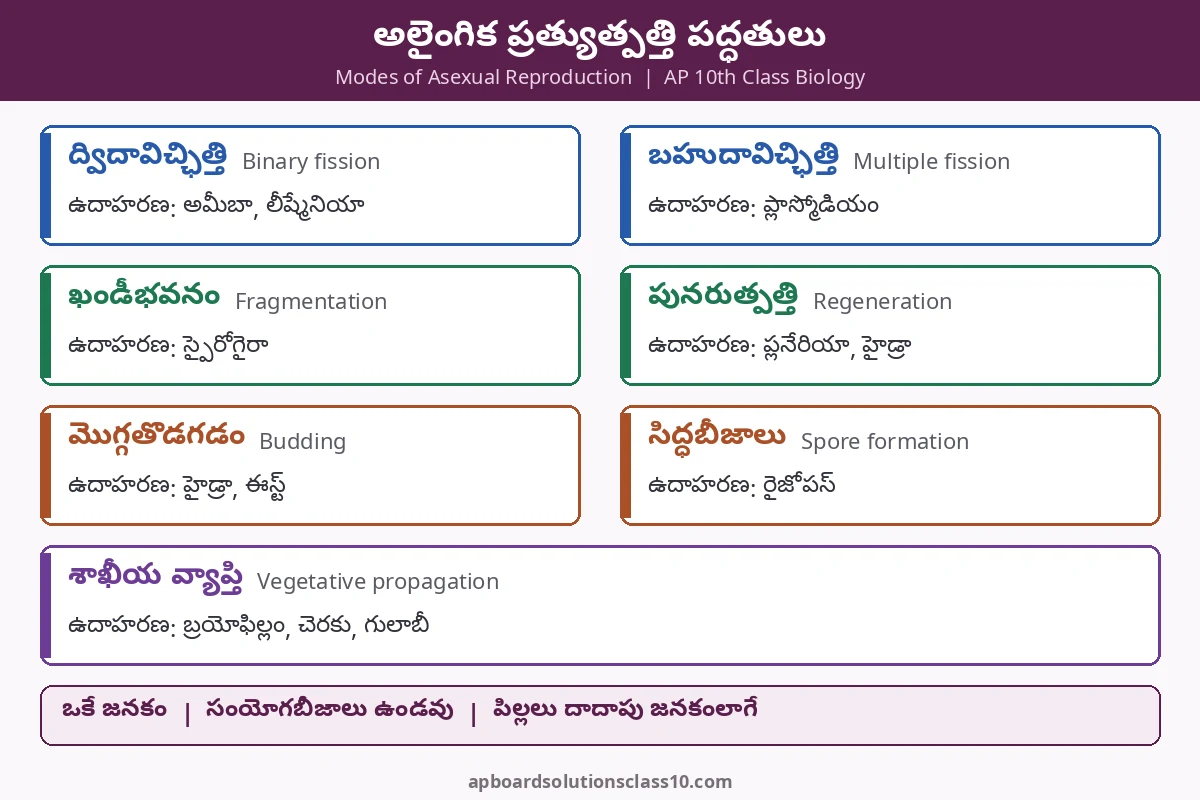
| పద్ధతి | ఎలా జరుగుతుంది | ఉదాహరణ |
|---|---|---|
| ద్విదావిచ్ఛిత్తి (Binary fission) | ఒక కణం రెండుగా విడిపోతుంది | అమీబా, లీష్మేనియా |
| బహుదావిచ్ఛిత్తి (Multiple fission) | ఒక కణం ఒకేసారి చాలా కణాలుగా విడిపోతుంది | ప్లాస్మోడియం (మలేరియా పరాన్నజీవి) |
| ఖండీభవనం (Fragmentation) | శరీరం ముక్కలై ప్రతి ముక్క కొత్త జీవిగా పెరుగుతుంది | స్పైరోగైరా |
| పునరుత్పత్తి (Regeneration) | కోసిన భాగం నుంచి పూర్తి జీవి ఏర్పడుతుంది | హైడ్రా, ప్లనేరియా |
| మొగ్గతొడగడం (Budding) | శరీరంపై మొగ్గ పెరిగి విడిపోతుంది | హైడ్రా, ఈస్ట్ |
| శాఖీయ వ్యాప్తి (Vegetative propagation) | వేరు, కాండం, ఆకు నుంచి కొత్త మొక్క | బ్రయోఫిల్లం ఆకు, చెరకు, గులాబీ, అరటి |
| సిద్ధబీజాలు (Spore formation) | సిద్ధబీజాశయంలోని సిద్ధబీజాలు మొలకెత్తుతాయి | రైజోపస్ (బ్రెడ్ బూజు) |
పుష్పించే మొక్కల్లో లైంగిక ప్రత్యుత్పత్తి
| పుష్పం భాగం | పని |
|---|---|
| రక్షక పత్రాలు (Sepals) | మొగ్గ దశలో పుష్పాన్ని కాపాడతాయి |
| ఆకర్షక పత్రాలు (Petals) | రంగుతో కీటకాలను ఆకర్షిస్తాయి |
| కేసరం (Stamen): పరాగకోశం + కేసరదండం | పురుష భాగం; పరాగకోశంలో పరాగరేణువులు ఉంటాయి |
| అండకోశం (Pistil): కీలాగ్రం, కీలం, అండాశయం | స్త్రీ భాగం; అండాశయంలో అండాలు ఉంటాయి |
పరాగరేణువులు పరాగకోశం నుంచి కీలాగ్రానికి చేరడం పరాగసంపర్కం. తర్వాత పరాగనాళం కీలం గుండా అండం వరకు పెరిగి, పురుష బీజకణం స్త్రీ బీజకణంతో కలవడం ఫలదీకరణం. ఫలదీకరణం తర్వాత అండం విత్తనంగా, అండాశయం ఫలంగా మారుతాయి.
మానవుల్లో ప్రత్యుత్పత్తి — ముఖ్య అవయవాలు
| అవయవం | పని |
|---|---|
| ముష్కాలు (Testes) | శుక్రకణాల తయారీ, టెస్టోస్టెరాన్ హార్మోన్ విడుదల |
| శుక్రవాహిక (Vas deferens) | శుక్రకణాలను ముందుకు తీసుకెళ్తుంది |
| శుక్రాశయాలు, ప్రోస్టేట్ గ్రంథి | ద్రవాలను కలిపి శుక్రకణాల కదలికను సులభం చేస్తాయి, పోషణ ఇస్తాయి |
| స్త్రీబీజకోశాలు (Ovaries) | అండాల తయారీ, ఈస్ట్రోజెన్, ప్రొజెస్టెరాన్ హార్మోన్లు |
| అండవాహిక (Fallopian tube) | అండం గర్భాశయానికి వెళ్లే మార్గం; ఫలదీకరణం ఇక్కడ జరుగుతుంది |
| గర్భాశయం (Uterus) | పిండం పెరిగే చోటు; జరాయువు (placenta) ద్వారా పోషణ |
| గర్భనిరోధక పద్ధతి | ఉదాహరణ |
|---|---|
| అవరోధ పద్ధతులు (Barrier) | కండోమ్; లైంగికంగా సంక్రమించే వ్యాధుల నుంచి కూడా రక్షిస్తుంది |
| రసాయన / హార్మోన్ పద్ధతులు | నోటి మాత్రలు; హార్మోన్ సమతుల్యతను మారుస్తాయి |
| గర్భాశయంలో అమర్చే సాధనాలు | కాపర్-T (Copper-T) |
| శస్త్రచికిత్స పద్ధతులు | వేసెక్టమీ (పురుషుల్లో), ట్యూబెక్టమీ (స్త్రీలలో) |
AP 10th Class How do Organisms Reproduce Solutions — In-text Questions
పాఠం మధ్యలో వచ్చే 12 ప్రశ్నలు. జవాబు చూడండి బటన్ నొక్కితే జవాబు కనిపిస్తుంది.
1. What is the importance of DNA copying in reproduction?
జవాబు చూడండి
తెలుగులో: DNA ప్రతికృతి వల్ల పిల్లలకు జనకం లాంటి శరీర నిర్మాణం వస్తుంది; చిన్న మార్పులు వైవిధ్యానికి కారణం.
2. Why is variation beneficial to the species but not necessarily for the individual?
జవాబు చూడండి
తెలుగులో: పరిస్థితులు మారితే కొన్ని జీవులైనా బతికేలా వైవిధ్యం జాతిని కాపాడుతుంది.
3. How does binary fission differ from multiple fission?
జవాబు చూడండి
(2) Binary fission happens in favourable conditions (Amoeba, Leishmania); in multiple fission (Plasmodium), the cell often forms a protective wall (cyst) first.
4. How will an organism be benefited if it reproduces through spores?
జవాబు చూడండి
5. Can you think of reasons why more complex organisms cannot give rise to new individuals through regeneration?
జవాబు చూడండి
6. Why is vegetative propagation practised for growing some types of plants?
జవాబు చూడండి
(2) Plants grown this way bear flowers and fruits earlier than those grown from seeds.
(3) All the new plants are genetically similar to the parent, so good characters are kept.
7. Why is DNA copying an essential part of the process of reproduction?
జవాబు చూడండి
8. How is the process of pollination different from fertilisation?
జవాబు చూడండి
తెలుగులో: పరాగసంపర్కం = పరాగరేణువులు కీలాగ్రం చేరడం; ఫలదీకరణం = బీజకణాల కలయిక.
9. What is the role of the seminal vesicles and the prostate gland?
జవాబు చూడండి
10. What are the changes seen in girls at the time of puberty?
జవాబు చూడండి
11. How does the embryo get nourishment inside the mother’s body?
జవాబు చూడండి
తెలుగులో: జరాయువు (placenta) ద్వారా తల్లి రక్తం నుంచి పోషణ, ఆక్సిజన్ అందుతాయి.
12. If a woman is using a copper-T, will it help in protecting her from sexually transmitted diseases?
జవాబు చూడండి
AP 10th Class How do Organisms Reproduce Solutions — Exercise Questions and Answers
పాఠం చివరి 11 అభ్యాస ప్రశ్నలు. 1 నుంచి 3 బహుళైచ్ఛిక ప్రశ్నలు.
1. Asexual reproduction takes place through budding in (a) amoeba (b) yeast (c) plasmodium (d) leishmania
జవాబు చూడండి
2. Which of the following is not a part of the female reproductive system in human beings? (a) Ovary (b) Uterus (c) Vas deferens (d) Fallopian tube
జవాబు చూడండి
3. The anther contains (a) sepals (b) ovules (c) pistil (d) pollen grains
జవాబు చూడండి
4. What are the advantages of sexual reproduction over asexual reproduction?
జవాబు చూడండి
(2) Variation helps the species to survive when the environment changes.
(3) New combinations of characters can appear, which helps in evolution.
In asexual reproduction the offspring are almost identical to the single parent, so variation is very small.
5. What are the functions performed by the testis in human beings?
జవాబు చూడండి
(2) They release the hormone testosterone, which regulates the formation of sperms and brings about the changes in boys at the time of puberty.
6. Why does menstruation occur?
జవాబు చూడండి
తెలుగులో: అండం ఫలదీకరణం కాకపోతే గర్భాశయ లోపలి పొర విడిపోయి బయటకు రావడమే ఋతుస్రావం.
7. Draw a labelled diagram of the longitudinal section of a flower.
జవాబు చూడండి
Write the labels clearly with straight label lines; the diagram is given in the Diagrams page linked above.
తెలుగులో: చిత్రంలో రక్షక పత్రం, ఆకర్షక పత్రం, పరాగకోశం, కేసరదండం, కీలాగ్రం, కీలం, అండాశయం, అండం పేర్లు తప్పనిసరి.
8. What are the different methods of contraception?
జవాబు చూడండి
(2) Hormonal methods: oral pills change the hormonal balance so that eggs are not released.
(3) Intrauterine devices: copper-T or loop placed in the uterus.
(4) Surgical methods: vasectomy (blocking the vas deferens in males) and tubectomy (blocking the fallopian tubes in females).
9. How are the modes for reproduction different in unicellular and multicellular organisms?
జవాబు చూడండి
10. How does reproduction help in providing stability to populations of species?
జవాబు చూడండి
11. What could be the reasons for adopting contraceptive methods?
జవాబు చూడండి
(2) To control the growth of population.
(3) Barrier methods also help prevent the spread of sexually transmitted diseases.
10th Class How do Organisms Reproduce Important Questions
పాఠ్యపుస్తకం ప్రశ్నలు కాకుండా, పరీక్షల్లో తరచూ వచ్చే రూపంలో మేము తయారు చేసిన ప్రశ్నలు.
1 మార్కు ప్రశ్నలు
1. Name the organism that reproduces by multiple fission.
జవాబు చూడండి
2. Which part of the flower develops into the fruit?
జవాబు చూడండి
3. Where does fertilisation take place in human females?
జవాబు చూడండి
4. Name the plant in which new plants grow from the notches of the leaf.
జవాబు చూడండి
2 మార్కుల ప్రశ్నలు
1. Differentiate between self-pollination and cross-pollination.
జవాబు చూడండి
2. What is regeneration? Give an example.
జవాబు చూడండి
3. What happens to the ovule and the ovary after fertilisation?
జవాబు చూడండి
4. Name two sexually transmitted diseases and one way to prevent them.
జవాబు చూడండి
4 మార్కుల ప్రశ్నలు
1. Explain budding in Hydra and spore formation in Rhizopus with diagrams.
జవాబు చూడండి
Spore formation in Rhizopus: thread-like hyphae bear blob-like structures called sporangia at their tips. Each sporangium contains many spores. When the sporangium bursts, the spores are released; on reaching a moist surface each spore grows into a new Rhizopus.
తెలుగులో: రెండు చిత్రాల్లో మొగ్గ, సిద్ధబీజాశయం, సిద్ధబీజాలు గుర్తించాలి.
2. Draw a labelled diagram of the human female reproductive system and write the functions of its parts.
జవాబు చూడండి
Functions: ovaries produce eggs and the hormones oestrogen and progesterone; the oviduct carries the egg and is the site of fertilisation; the uterus holds and nourishes the growing embryo through the placenta; the vagina receives the sperms and is the birth canal.
3. Draw a labelled diagram of germination of pollen on the stigma and explain fertilisation in a flower.
జవాబు చూడండి
Explanation: after pollination, the pollen grain on the stigma grows a pollen tube. The tube grows down through the style and reaches the ovule in the ovary. The male germ cell travels through the tube and fuses with the female germ cell in the ovule. The fused cell (zygote) grows into the embryo.
4. Describe the human male reproductive system.
జవాబు చూడండి
How do Organisms Reproduce క్విజ్ — 10 ప్రశ్నలు
జవాబు చూసి, మీది సరైతేనే టిక్ పెట్టండి. కింది బార్లో 10 కి మీ స్కోర్ కనిపిస్తుంది.
1. Budding takes place in:
(A) Amoeba (B) yeast (C) Plasmodium (D) Leishmania [1 మార్కు]
జవాబు చూడండి
2. Which is not a part of the female reproductive system?
(A) ovary (B) uterus (C) vas deferens (D) fallopian tube [1 మార్కు]
జవాబు చూడండి
3. The anther contains:
(A) sepals (B) ovules (C) pistil (D) pollen grains [1 మార్కు]
జవాబు చూడండి
4. Multiple fission occurs in:
(A) Plasmodium (B) Hydra (C) Spirogyra (D) Planaria [1 మార్కు]
జవాబు చూడండి
5. Spirogyra reproduces by:
(A) budding (B) fragmentation (C) spore formation (D) binary fission [1 మార్కు]
జవాబు చూడండి
6. After fertilisation the ovary becomes the:
(A) seed (B) fruit (C) embryo (D) flower [1 మార్కు]
జవాబు చూడండి
7. Sperms are produced in the:
(A) prostate gland (B) testes (C) vas deferens (D) urethra [1 మార్కు]
జవాబు చూడండి
8. The embryo gets nourishment through the:
(A) placenta (B) ovary (C) oviduct (D) cervix [1 మార్కు]
జవాబు చూడండి
9. Spores of Rhizopus are formed in the:
(A) hyphae (B) sporangium (C) bud (D) root [1 మార్కు]
జవాబు చూడండి
10. Copper-T is used to:
(A) prevent pregnancy (B) prevent STDs (C) cure infections (D) increase eggs [1 మార్కు]
జవాబు చూడండి
ఈ పాఠంలో మార్కులు ఎక్కడ పోతాయి
- పరాగసంపర్కం, ఫలదీకరణం ఒకటే అని రాయడం. పరాగసంపర్కం ముందు, ఫలదీకరణం తర్వాత.
- బహుదావిచ్ఛిత్తికి అమీబాను ఉదాహరణగా రాయడం. అమీబా ద్విదావిచ్ఛిత్తి; బహుదావిచ్ఛిత్తి ప్లాస్మోడియం.
- మొగ్గతొడగడానికి హైడ్రాతో పాటు ఈస్ట్ కూడా ఉదాహరణ అని గుర్తుంచుకోకపోవడం (అభ్యాస ప్రశ్న 1).
- కాపర్-T వ్యాధుల నుంచి రక్షిస్తుందని రాయడం. అది గర్భం రాకుండా మాత్రమే ఆపుతుంది.
- పుష్పం నిలువుకోత చిత్రంలో అండాశయం, అండం, కీలాగ్రం పేర్లు రాయకపోవడం.
తర్వాత ఏం చదవాలి
- AP 10th Class SA1 Biology Question Paper 2026-27 — ఈ పాఠం ఉన్న SA1 సాధన పేపర్
- 10th Class Biology Important Diagrams in Telugu — పుష్పం, ప్రత్యుత్పత్తి వ్యవస్థ చిత్రాలు
- AP 10th Class Life Processes Solutions — మొదటి పాఠం జవాబులు
- AP 10th Class FA2 Biology Question Paper — FA2 అసలు పేపర్ జవాబులు
- Class 10 Biology Important Questions with Answers — అన్ని పాఠాల ముఖ్య ప్రశ్నలు
- AP 10th Class Biology Blueprint 2027 — ఏ పాఠానికి ఎన్ని మార్కులు
FAQs
AP 10th Class How do Organisms Reproduce పాఠం ఏ నెలలో చెబుతారు?
AP SCERT నెలవారీ సిలబస్ ప్రకారం సెప్టెంబర్లో. పదో తరగతి జీవశాస్త్రంలో ఇది మూడో పాఠం.
ఈ పాఠంలో ఎన్ని ప్రశ్నలు ఉన్నాయి?
పాఠం చివర 11 అభ్యాస ప్రశ్నలు, పాఠం మధ్యలో 12 In-text ప్రశ్నలు. అన్నింటికీ జవాబులు ఈ పేజీలో ఉన్నాయి.
అలైంగిక ప్రత్యుత్పత్తి అంటే ఏమిటి?
ఒకే జనకం నుంచి, సంయోగబీజాలు లేకుండా కొత్త జీవులు ఏర్పడటం. ద్విదావిచ్ఛిత్తి, మొగ్గతొడగడం, ఖండీభవనం, సిద్ధబీజాలు దీనికి ఉదాహరణలు.
పరాగసంపర్కం, ఫలదీకరణం మధ్య తేడా ఏమిటి?
పరాగరేణువులు పరాగకోశం నుంచి కీలాగ్రం చేరడం పరాగసంపర్కం. పురుష, స్త్రీ బీజకణాలు అండంలో కలవడం ఫలదీకరణం.
శాఖీయ వ్యాప్తి వల్ల లాభం ఏమిటి?
విత్తనాలు ఏర్పరచని మొక్కలను కూడా పెంచవచ్చు, త్వరగా పూలు, పండ్లు వస్తాయి, జనక మొక్క లక్షణాలు అలాగే ఉంటాయి.
వైవిధ్యం ఎందుకు ముఖ్యం?
పరిస్థితులు ఒక్కసారిగా మారినా కొన్ని జీవులు బతికి జాతి కొనసాగడానికి వైవిధ్యం సహాయపడుతుంది.
పిండానికి పోషణ ఎలా అందుతుంది?
గర్భాశయ గోడలోని జరాయువు (placenta) ద్వారా తల్లి రక్తం నుంచి గ్లూకోజ్, ఆక్సిజన్ అందుతాయి.
ఈ పాఠంలో ఏ చిత్రాలు ముఖ్యం?
పుష్పం నిలువుకోత, కీలాగ్రంపై పరాగరేణువు మొలకెత్తడం, హైడ్రాలో మొగ్గతొడగడం, రైజోపస్ సిద్ధబీజాలు, మానవ ప్రత్యుత్పత్తి వ్యవస్థలు.
SA1 లో ఈ పాఠం వస్తుందా?
అవును, ఈ పాఠం SA1 సిలబస్లో ఉంది. AP 10th Class SA1 Biology Question Paper లో సాధన చేయండి.
తర్వాతి పాఠం జవాబులు ఎప్పుడు?
తర్వాత Heredity (అనువంశికత) పాఠం జవాబుల పేజీ వస్తుంది.
Official Sources
పాఠాల క్రమం, నెలవారీ ప్రణాళిక: AP SCERT 2026-27 నెలవారీ సిలబస్, పాఠశాల విద్యాశాఖ ఆంధ్రప్రదేశ్. పాఠ్యపుస్తకాలు పాఠశాల విద్యాశాఖ సైట్లో లభిస్తాయి. జవాబులు మా సొంత మాటల్లో రాశాం.