AP 10th Class Control and Coordination Solutions — పదో తరగతి జీవశాస్త్రం నియంత్రణ, సమన్వయం పాఠంలోని అన్ని పాఠ్యపుస్తకం ప్రశ్నలకు జవాబులు. 14 In-text ప్రశ్నలు, 12 అభ్యాస ప్రశ్నలు, పరీక్షకు ముఖ్యమైన 1, 2, 4 మార్కుల ప్రశ్నలు, 10 ప్రశ్నల క్విజ్ ఒకే పేజీలో ఉన్నాయి.
ప్రతి జవాబు పరీక్షలో రాసే విధంగా ఇంగ్లీష్లో, అవసరమైన చోట కింద తెలుగు వివరణతో ఉంటుంది. ప్రతీకార చర్య మార్గం చార్ట్గా, మెదడు భాగాలు, మొక్కల హార్మోన్లు, జంతు హార్మోన్లు పట్టికలుగా ఇచ్చాం. ముందు పాఠం జవాబులు AP 10th Class Life Processes Solutions లో ఉన్నాయి.
జీవశాస్త్రం తర్వాతి పాఠాల జవాబులు వచ్చిన వెంటనే లింక్ రావాలంటే WhatsApp గ్రూప్లో చేరండి
ఈ పేజీలో: పాఠంలో ఏముంది | నాడీ వ్యవస్థ, ప్రతీకార చర్య | మొక్కల్లో సమన్వయం | జంతు హార్మోన్లు | In-text ప్రశ్నలు | అభ్యాస ప్రశ్నలు 1-12 | ముఖ్య ప్రశ్నలు | క్విజ్ | మార్కులు పోయే చోట్లు | FAQs
AP 10th Class Control and Coordination Solutions — పాఠంలో ఏముంది
AP SCERT నెలవారీ సిలబస్ ప్రకారం నియంత్రణ, సమన్వయం ఆగస్టులో బోధించే పాఠం. పదో తరగతి జీవశాస్త్రంలో ఇది రెండో పాఠం, SA1 సిలబస్లో ఉంది. నాడీ కణం (neuron) చిత్రం, ప్రతీకార చర్య, మెదడు భాగాల పనులు, హార్మోన్లు, వాటి లోపం వల్ల వచ్చే వ్యాధుల నుంచి ఎక్కువ ప్రశ్నలు వస్తాయి.
| భాగం | ముఖ్య విషయాలు |
|---|---|
| జంతువుల్లో నాడీ వ్యవస్థ | గ్రాహకాలు, నాడీ కణం, సినాప్స్, ప్రతీకార చర్య, మెదడు, వెన్నుపాము |
| మొక్కల్లో సమన్వయం | తక్షణ కదలికలు (అత్తిపత్తి), పెరుగుదల వల్ల కదలికలు (అనువర్తనాలు), మొక్కల హార్మోన్లు |
| జంతువుల్లో హార్మోన్లు | అంతఃస్రావ గ్రంథులు, థైరాక్సిన్, ఇన్సులిన్, అడ్రినలిన్, పెరుగుదల హార్మోన్, ఫీడ్బ్యాక్ నియంత్రణ |
నాడీ కణం, మెదడు చిత్రాలు పేర్లతో సహా 10th Class Biology Important Diagrams in Telugu లో ఉన్నాయి.
నాడీ వ్యవస్థ — ప్రతీకార చర్య మార్గం
సమాచారం నాడీ కణంలో విద్యుత్ ప్రచోదనం (electrical impulse) గా డెండ్రైట్ నుంచి కణదేహానికి, అక్కడి నుంచి ఆక్సాన్ గుండా దాని చివరకు ప్రయాణిస్తుంది. అక్కడ విడుదలయ్యే రసాయనాలు సినాప్స్ (రెండు నాడీ కణాల మధ్య ఖాళీ) దాటి తర్వాతి నాడీ కణంలో మళ్లీ ప్రచోదనం మొదలుపెడతాయి.
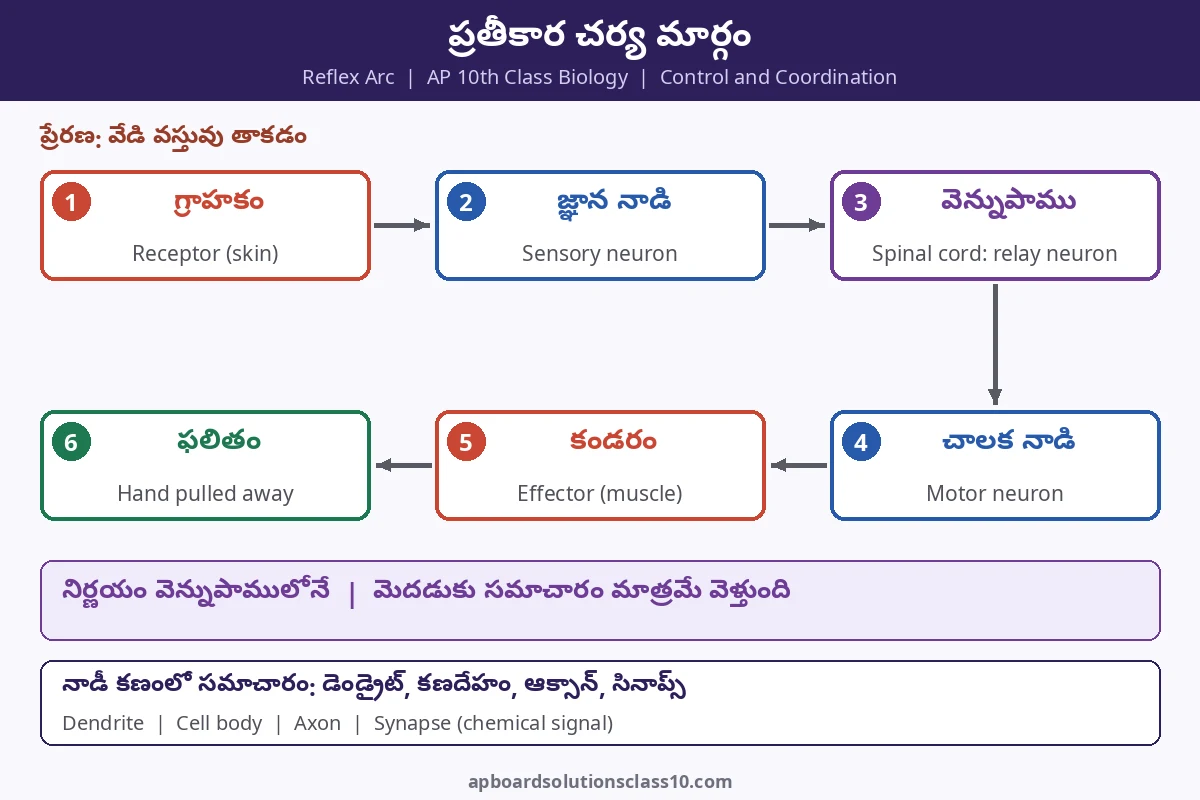
వేడి వస్తువును తాకిన వెంటనే చేయి వెనక్కి తీసుకోవడం ప్రతీకార చర్య. ఆలోచించే సమయం ఉండదు కాబట్టి ఆ నిర్ణయం వెన్నుపాములోనే జరుగుతుంది. సమాచారం మెదడుకు కూడా వెళ్తుంది, కానీ చర్య దాని కోసం ఆగదు.
| మెదడు భాగం | ముఖ్య పనులు |
|---|---|
| ముందు మెదడు (Fore-brain) / మస్తిష్కం | ఆలోచన, జ్ఞాపకం, చూడటం, వినడం, వాసన వంటి సమాచారం గ్రహించడం, స్వచ్ఛంద కదలికలు |
| మధ్య మెదడు (Mid-brain) | కొన్ని అనియంత్రిత చర్యలు |
| మజ్జాముఖం (Medulla, వెనుక మెదడు) | రక్తపీడనం, లాలాజలం ఊరడం, వాంతి వంటి అనియంత్రిత చర్యలు |
| అనుమస్తిష్కం (Cerebellum, వెనుక మెదడు) | శరీర భంగిమ, సమతాస్థితి, కదలికల ఖచ్చితత్వం (నడక, సైకిల్ తొక్కడం) |
మొక్కల్లో సమన్వయం — అనువర్తనాలు, హార్మోన్లు
| అనువర్తనం (Tropism) | ప్రేరణ | ఉదాహరణ |
|---|---|---|
| కాంతి అనువర్తనం (Phototropism) | కాంతి | కాండం కాంతి వైపు వంగడం |
| గురుత్వానువర్తనం (Geotropism) | భూమ్యాకర్షణ | వేరు కిందికి పెరగడం |
| జలానువర్తనం (Hydrotropism) | నీరు | వేర్లు నీటి వైపు పెరగడం |
| రసాయనానువర్తనం (Chemotropism) | రసాయనాలు | పరాగనాళం అండం వైపు పెరగడం |
| మొక్కల హార్మోన్ | పని |
|---|---|
| ఆక్సిన్ (Auxin) | కాండం కొనలో తయారై కణాల పొడవు పెంచుతుంది; కాంతి అనువర్తనానికి కారణం |
| జిబ్బరెల్లిన్ (Gibberellin) | కాండం పెరుగుదలకు సహాయం |
| సైటోకైనిన్ (Cytokinin) | కణ విభజన పెంచుతుంది; పండ్లు, విత్తనాల్లో ఎక్కువ |
| అబ్సిసిక్ ఆమ్లం (Abscisic acid) | పెరుగుదలను అడ్డుకుంటుంది; ఆకులు వాడిపోవడం |
అత్తిపత్తి (Mimosa) ఆకులను తాకితే వెంటనే ముడుచుకుంటాయి. ఇది పెరుగుదల వల్ల కాదు; కణాల్లో నీటి పరిమాణం మారి ఆకారం మారడం వల్ల జరుగుతుంది.
జంతువుల్లో హార్మోన్లు — గ్రంథులు, పనులు
| హార్మోన్ | గ్రంథి | పని |
|---|---|---|
| పెరుగుదల హార్మోన్ | పీయూష గ్రంథి (Pituitary) | శరీర పెరుగుదల, అభివృద్ధి; లోపిస్తే మరుగుజ్జుతనం |
| థైరాక్సిన్ | అవటు గ్రంథి (Thyroid) | కార్బోహైడ్రేట్లు, ప్రోటీన్లు, కొవ్వుల జీవక్రియ; తయారీకి అయోడిన్ కావాలి |
| ఇన్సులిన్ | క్లోమం (Pancreas) | రక్తంలో చక్కెర స్థాయి నియంత్రణ; లోపిస్తే మధుమేహం |
| అడ్రినలిన్ | అధివృక్క గ్రంథి (Adrenal) | అత్యవసర పరిస్థితికి శరీరాన్ని సిద్ధం చేయడం |
| టెస్టోస్టెరాన్ | ముష్కాలు (Testes) | యౌవనంలో పురుషుల్లో మార్పులు |
| ఈస్ట్రోజెన్ | స్త్రీబీజకోశాలు (Ovaries) | యౌవనంలో స్త్రీలలో మార్పులు |
| విడుదల చేసే హార్మోన్లు | హైపోథాలమస్ | పీయూష గ్రంథిని హార్మోన్లు విడుదల చేయమని ప్రేరేపిస్తాయి |
హార్మోన్లు ఎంత, ఎప్పుడు విడుదల కావాలో ఫీడ్బ్యాక్ విధానం నిర్ణయిస్తుంది. ఉదాహరణ: రక్తంలో చక్కెర పెరిగితే క్లోమం ఎక్కువ ఇన్సులిన్ విడుదల చేస్తుంది; చక్కెర తగ్గగానే ఇన్సులిన్ విడుదల తగ్గుతుంది.
AP 10th Class Control and Coordination Solutions — In-text Questions
పాఠం మధ్యలో వచ్చే 14 ప్రశ్నలు. జవాబు చూడండి బటన్ నొక్కితే జవాబు కనిపిస్తుంది.
1. What is the difference between a reflex action and walking?
జవాబు చూడండి
తెలుగులో: ప్రతీకార చర్య ఆలోచన లేకుండా వెంటనే జరుగుతుంది; నడక మన ఇష్టంతో చేసే స్వచ్ఛంద చర్య.
2. What happens at the synapse between two neurons?
జవాబు చూడండి
తెలుగులో: విద్యుత్ ప్రచోదనం రసాయనాలుగా మారి ఖాళీ దాటుతుంది, తర్వాతి నాడీ కణంలో మళ్లీ ప్రచోదనం మొదలవుతుంది.
3. Which part of the brain maintains posture and equilibrium of the body?
జవాబు చూడండి
తెలుగులో: అనుమస్తిష్కం.
4. How do we detect the smell of an agarbatti (incense stick)?
జవాబు చూడండి
5. What is the role of the brain in reflex action?
జవాబు చూడండి
తెలుగులో: చర్య వెన్నుపాము చేస్తుంది; మెదడుకు సమాచారం మాత్రమే అందుతుంది.
6. What are plant hormones?
జవాబు చూడండి
7. How is the movement of leaves of the sensitive plant different from the movement of a shoot towards light?
జవాబు చూడండి
(2) The movement of Mimosa leaves is not due to growth; it happens because the cells change shape by changing the amount of water in them. The bending of the shoot is a growth movement, caused by auxin.
(3) Mimosa movement does not depend on the direction of the stimulus; the shoot movement is directional (towards light).
8. Give an example of a plant hormone that promotes growth.
జవాబు చూడండి
9. How do auxins promote the growth of a tendril around a support?
జవాబు చూడండి
తెలుగులో: తాకని వైపు కణాలు వేగంగా పెరుగుతాయి కాబట్టి నులితీగ ఆధారం చుట్టూ చుట్టుకుంటుంది.
10. Design an experiment to demonstrate hydrotropism.
జవాబు చూడండి
Observation: the roots grow and bend towards the clay pot with water.
Conclusion: roots grow towards water; this is hydrotropism.
11. How does chemical coordination take place in animals?
జవాబు చూడండి
12. Why is the use of iodised salt advisable?
జవాబు చూడండి
తెలుగులో: అయోడిన్ లోపిస్తే గాయిటర్ (గళగండం) వస్తుంది.
13. How does our body respond when adrenaline is secreted into the blood?
జవాబు చూడండి
14. Why are some patients of diabetes treated by giving injections of insulin?
జవాబు చూడండి
AP 10th Class Control and Coordination Solutions — Exercise Questions and Answers
పాఠం చివరి 12 అభ్యాస ప్రశ్నలు. 1 నుంచి 3 బహుళైచ్ఛిక ప్రశ్నలు.
1. Which of the following is a plant hormone? (a) Insulin (b) Thyroxin (c) Oestrogen (d) Cytokinin
జవాబు చూడండి
2. The gap between two neurons is called a (a) dendrite (b) synapse (c) axon (d) impulse
జవాబు చూడండి
3. The brain is responsible for (a) thinking (b) regulating the heart beat (c) balancing the body (d) all of the above
జవాబు చూడండి
4. What is the function of receptors in our body? Think of situations where receptors do not work properly. What problems are likely to arise?
జవాబు చూడండి
If receptors do not work properly, the body cannot detect the stimulus. For example, if touch or heat receptors are damaged we may not feel a hot object and may get burnt; if taste receptors do not work, we cannot taste food (as during a cold); damaged receptors in the eye or ear cause problems in seeing or hearing.
5. Draw the structure of a neuron and explain its function.
జవాబు చూడండి
Function: dendrites receive information and start an electrical impulse; the impulse travels from the dendrite to the cell body and along the axon to its end; at the nerve ending chemicals are released which pass the message across the synapse to the next neuron or to a muscle or gland. Neurons thus carry messages quickly in the body.
తెలుగులో: చిత్రంలో డెండ్రైట్, కణదేహం, కేంద్రకం, ఆక్సాన్, నాడీ అంత్యం పేర్లు తప్పనిసరి.
6. How does phototropism occur in plants?
జవాబు చూడండి
తెలుగులో: ఆక్సిన్ నీడ వైపు చేరి ఆ వైపు కణాలను పొడవుగా పెంచుతుంది, అందుకే కాండం కాంతి వైపు వంగుతుంది.
7. Which signals will get disrupted in case of a spinal cord injury?
జవాబు చూడండి
8. How does chemical coordination occur in plants?
జవాబు చూడండి
9. What is the need for a system of control and coordination in an organism?
జవాబు చూడండి
10. How are involuntary actions and reflex actions different from each other?
జవాబు చూడండి
(2) Reflex actions are sudden, quick responses to a particular stimulus (such as pulling the hand away from a hot object); they are controlled by the spinal cord.
(3) Involuntary actions go on all the time; reflex actions happen only when the stimulus appears.
11. Compare and contrast nervous and hormonal mechanisms for control and coordination in animals.
జవాబు చూడండి
(2) Nervous responses are very fast; hormonal responses are slower.
(3) Nervous effect is short-lived; hormonal effect usually lasts longer.
(4) Nervous messages reach only the cells connected by nerves; hormones can reach all cells of the body through blood.
Similarity: both help the body to coordinate its activities and respond to stimuli.
12. What is the difference between the manner in which movement takes place in a sensitive plant and the movement in our legs?
జవాబు చూడండి
10th Class Control and Coordination Important Questions
పాఠ్యపుస్తకం ప్రశ్నలు కాకుండా, పరీక్షల్లో తరచూ వచ్చే రూపంలో మేము తయారు చేసిన ప్రశ్నలు.
1 మార్కు ప్రశ్నలు
1. Name the hormone that regulates the blood sugar level.
జవాబు చూడండి
2. Which gland is called the master gland?
జవాబు చూడండి
3. Which part of the brain controls blood pressure and vomiting?
జవాబు చూడండి
4. Name the plant hormone that inhibits growth.
జవాబు చూడండి
2 మార్కుల ప్రశ్నలు
1. What is a reflex arc? Name its components.
జవాబు చూడండి
2. Why are hormones released only in precise quantities? How is it controlled?
జవాబు చూడండి
3. What happens if growth hormone is deficient or in excess in childhood?
జవాబు చూడండి
4. Write any two differences between tropic movement and nastic movement in plants.
జవాబు చూడండి
4 మార్కుల ప్రశ్నలు
1. Draw a labelled diagram of the reflex arc and explain how a reflex action takes place.
జవాబు చూడండి
Explanation: when we touch a hot object, the receptors in the skin detect heat and send impulses through the sensory neuron to the spinal cord. In the spinal cord the relay neuron passes the message to the motor neuron, which carries it to the muscles of the arm. The muscles contract and the hand is pulled away. The information also reaches the brain.
తెలుగులో: పై చార్ట్లో ఉన్న క్రమం గుర్తుంచుకోండి: గ్రాహకం, జ్ఞాన నాడి, వెన్నుపాము, చాలక నాడి, కండరం.
2. Draw a labelled diagram of the human brain and write the functions of its parts.
జవాబు చూడండి
Functions: (1) Fore-brain: thinking, memory, receiving sensory information, voluntary actions. (2) Mid-brain: some involuntary actions. (3) Medulla: blood pressure, salivation, vomiting. (4) Cerebellum: posture, balance and precision of voluntary movements.
3. Name the endocrine glands and the hormones they secrete, with one function each.
జవాబు చూడండి
తెలుగులో: పైన ఉన్న హార్మోన్ల పట్టిక ఇదే జవాబు.
4. Describe an activity to show that the shoot bends towards light.
జవాబు చూడండి
Control and Coordination క్విజ్ — 10 ప్రశ్నలు
జవాబు చూసి, మీది సరైతేనే టిక్ పెట్టండి. కింది బార్లో 10 కి మీ స్కోర్ కనిపిస్తుంది.
1. Which of these is a plant hormone?
(A) insulin (B) thyroxin (C) oestrogen (D) cytokinin [1 మార్కు]
జవాబు చూడండి
2. The gap between two neurons is called:
(A) dendrite (B) synapse (C) axon (D) impulse [1 మార్కు]
జవాబు చూడండి
3. Posture and balance of the body are maintained by the:
(A) cerebrum (B) medulla (C) cerebellum (D) mid-brain [1 మార్కు]
జవాబు చూడండి
4. Reflex actions are controlled mainly by the:
(A) spinal cord (B) cerebrum (C) pituitary (D) heart [1 మార్కు]
జవాబు చూడండి
5. Iodine is needed to make:
(A) insulin (B) thyroxin (C) adrenaline (D) auxin [1 మార్కు]
జవాబు చూడండి
6. Deficiency of insulin causes:
(A) goitre (B) dwarfism (C) diabetes (D) anaemia [1 మార్కు]
జవాబు చూడండి
7. Bending of a shoot towards light is caused by:
(A) auxin (B) abscisic acid (C) adrenaline (D) cytokinin [1 మార్కు]
జవాబు చూడండి
8. Roots growing towards water is called:
(A) phototropism (B) geotropism (C) hydrotropism (D) chemotropism [1 మార్కు]
జవాబు చూడండి
9. The hormone that prepares the body for an emergency is:
(A) thyroxin (B) adrenaline (C) insulin (D) growth hormone [1 మార్కు]
జవాబు చూడండి
10. Growth hormone is secreted by the:
(A) thyroid (B) adrenal (C) pituitary (D) pancreas [1 మార్కు]
జవాబు చూడండి
ఈ పాఠంలో మార్కులు ఎక్కడ పోతాయి
- ప్రతీకార చర్యను మెదడు నియంత్రిస్తుందని రాయడం. ప్రతీకార చర్య వెన్నుపాములో జరుగుతుంది; మెదడుకు సమాచారం మాత్రమే వెళ్తుంది.
- అనుమస్తిష్కం (cerebellum), మస్తిష్కం (cerebrum) పనులు తారుమారు చేయడం. సమతాస్థితి అనుమస్తిష్కం పని.
- అత్తిపత్తి కదలికను పెరుగుదల కదలిక అని రాయడం. అది కణాల్లో నీటి మార్పు వల్ల జరిగే తక్షణ కదలిక.
- థైరాక్సిన్కు అయోడిన్ కావాలని, అయోడిన్ లోపిస్తే గాయిటర్ వస్తుందని రెండూ రాయకపోవడం.
- నాడీ కణం, ప్రతీకార చర్య మార్గం చిత్రాల్లో బాణం దిశ, భాగాల పేర్లు రాయకపోవడం.
తర్వాత ఏం చదవాలి
- AP 10th Class SA1 Biology Question Paper 2026-27 — ఈ పాఠం ఉన్న SA1 సాధన పేపర్
- AP 10th Class Biology Nervous System Slip Test — నాడీ వ్యవస్థ స్లిప్ టెస్ట్
- 10th Class Biology Important Diagrams in Telugu — అన్ని చిత్రాలు పేర్లతో
- AP 10th Class FA2 Biology Question Paper — FA2 అసలు పేపర్ జవాబులు
- AP 10th Class Biology Blueprint 2027 — ఏ పాఠానికి ఎన్ని మార్కులు
FAQs
AP 10th Class Control and Coordination పాఠం ఏ నెలలో చెబుతారు?
AP SCERT నెలవారీ సిలబస్ ప్రకారం ఆగస్టులో. పదో తరగతి జీవశాస్త్రంలో ఇది రెండో పాఠం.
ఈ పాఠంలో ఎన్ని ప్రశ్నలు ఉన్నాయి?
పాఠం చివర 12 అభ్యాస ప్రశ్నలు, పాఠం మధ్యలో 14 In-text ప్రశ్నలు. అన్నింటికీ జవాబులు ఈ పేజీలో ఉన్నాయి.
ప్రతీకార చర్య అంటే ఏమిటి?
ఒక ప్రేరణకు ఆలోచించకుండా వెంటనే, అసంకల్పితంగా జరిగే ప్రతిస్పందన. ఉదాహరణ: వేడి వస్తువు తాకగానే చేయి వెనక్కి తీసుకోవడం.
సినాప్స్ అంటే ఏమిటి?
రెండు నాడీ కణాల మధ్య ఉండే చిన్న ఖాళీ. అక్కడ సమాచారం రసాయనాల రూపంలో దాటుతుంది.
అనుమస్తిష్కం పని ఏమిటి?
శరీర భంగిమ, సమతాస్థితి కాపాడటం, నడక, సైకిల్ తొక్కడం వంటి కదలికలు ఖచ్చితంగా జరిగేలా చూడటం.
మొక్కల్లో నాడీ వ్యవస్థ లేదు కదా, అవి ఎలా స్పందిస్తాయి?
హార్మోన్ల ద్వారా, కణాల్లో నీటి మార్పుల ద్వారా. ఆక్సిన్, జిబ్బరెల్లిన్, సైటోకైనిన్, అబ్సిసిక్ ఆమ్లం ముఖ్య మొక్కల హార్మోన్లు.
అయోడిన్ ఉప్పు ఎందుకు వాడాలి?
థైరాక్సిన్ తయారీకి అయోడిన్ అవసరం. అయోడిన్ లోపిస్తే గాయిటర్ (మెడ ఉబ్బడం) వస్తుంది.
ఈ పాఠంలో ఏ చిత్రాలు ముఖ్యం?
నాడీ కణం (neuron), ప్రతీకార చర్య మార్గం (reflex arc), మానవ మెదడు, కాంతి అనువర్తనం ప్రయోగం.
SA1 లో ఈ పాఠం వస్తుందా?
అవును, నియంత్రణ, సమన్వయం SA1 సిలబస్లో ఉంది. AP 10th Class SA1 Biology Question Paper లో సాధన చేయండి.
తర్వాతి పాఠం జవాబులు ఎప్పుడు?
తర్వాత How do Organisms Reproduce (జీవులు ఎలా ప్రత్యుత్పత్తి చేస్తాయి) పాఠం జవాబుల పేజీ వస్తుంది.
Official Sources
పాఠాల క్రమం, నెలవారీ ప్రణాళిక: AP SCERT 2026-27 నెలవారీ సిలబస్, పాఠశాల విద్యాశాఖ ఆంధ్రప్రదేశ్. పాఠ్యపుస్తకాలు పాఠశాల విద్యాశాఖ సైట్లో లభిస్తాయి. జవాబులు మా సొంత మాటల్లో రాశాం.