AP 10th Class Our Environment Solutions — పదో తరగతి జీవశాస్త్రం మన పర్యావరణం (Our Environment) పాఠంలోని అన్ని In-text, అభ్యాస ప్రశ్నలకు జవాబులు, పరీక్షకు ముఖ్యమైన 1, 2, 4 మార్కుల ప్రశ్నలు, 10 ప్రశ్నల క్విజ్ ఒకే పేజీలో ఉన్నాయి.
ప్రతి జవాబు పరీక్షలో రాసే విధంగా ఇంగ్లీష్లో, ప్రతి పెద్ద జవాబు కింద తెలుగు వివరణతో ఉంటుంది. ఆహార గొలుసు, శక్తి పిరమిడ్ చార్ట్గా, జీవ విచ్ఛిన్నం అయ్యే, కాని పదార్థాలు పట్టికగా ఇచ్చాం. ముందు పాఠం జవాబులు AP 10th Class Heredity Solutions లో ఉన్నాయి.
పదో తరగతి తర్వాతి పాఠాల జవాబులు వచ్చిన వెంటనే లింక్ రావాలంటే WhatsApp గ్రూప్లో చేరండి
ఈ పేజీలో: పాఠంలో ఏముంది | వ్యర్థాలు | ఆవరణ వ్యవస్థ, ఆహార గొలుసు | ఓజోన్ పొర | In-text ప్రశ్నలు | అభ్యాస ప్రశ్నలు | ముఖ్య ప్రశ్నలు | క్విజ్ | మార్కులు పోయే చోట్లు | FAQs
AP 10th Class Our Environment Solutions — పాఠంలో ఏముంది
AP SCERT నెలవారీ సిలబస్ ప్రకారం మన పర్యావరణం నవంబర్లో బోధించే పాఠం. పదో తరగతి జీవశాస్త్రంలో ఇది ఐదో, చివరి పాఠం. ఇది SA1 సిలబస్లో లేదు, తర్వాతి పరీక్షలకు, SSC 2027 కు ఉపయోగపడుతుంది. ఆహార గొలుసు, పోషక స్థాయిలు, 10 శాతం నియమం, జీవ సంచయనం (biological magnification), ఓజోన్ పొర ప్రశ్నలు ఎక్కువగా వస్తాయి.
| పదం | అర్థం |
|---|---|
| ఆవరణ వ్యవస్థ (Ecosystem) | ఒక ప్రాంతంలోని జీవులు, నిర్జీవ అంశాలు (నేల, నీరు, గాలి, ఉష్ణోగ్రత) కలిసి ఉండే వ్యవస్థ |
| ఉత్పత్తిదారులు (Producers) | సూర్యకాంతితో ఆహారం తయారుచేసే ఆకుపచ్చ మొక్కలు |
| వినియోగదారులు (Consumers) | శాకాహారులు, మాంసాహారులు, సర్వభక్షకులు, పరాన్నజీవులు |
| విచ్ఛిన్నకారులు (Decomposers) | చనిపోయిన జీవులను సరళ పదార్థాలుగా మార్చే బాక్టీరియా, శిలీంధ్రాలు |
| పోషక స్థాయి (Trophic level) | ఆహార గొలుసులో శక్తి బదిలీ అయ్యే ఒక్కో మెట్టు |
| జీవ సంచయనం (Biological magnification) | హానికర రసాయనాలు ఆహార గొలుసులో పై స్థాయిలకు వెళ్లేకొద్దీ ఎక్కువగా పోగుపడటం |
జీవ విచ్ఛిన్నం అయ్యే, కాని వ్యర్థాలు
| అంశం | జీవ విచ్ఛిన్నం అయ్యేవి (Biodegradable) | జీవ విచ్ఛిన్నం కానివి (Non-biodegradable) |
|---|---|---|
| అర్థం | బాక్టీరియా, సూక్ష్మజీవుల వల్ల విడిపోతాయి | సూక్ష్మజీవులు విడదీయలేవు, చాలా కాలం ఉంటాయి |
| ఉదాహరణలు | కూరగాయల తొక్కలు, కాగితం, ఆకులు, కలప, పత్తి గుడ్డ | ప్లాస్టిక్, పాలిథీన్, గాజు, DDT, లోహపు డబ్బాలు |
| ప్రభావం | ఎక్కువైతే దుర్వాసన, ఈగలు, వ్యాధులు | నేల, నీరు కలుషితం; ఆహార గొలుసులో పోగుపడతాయి |
ఆవరణ వ్యవస్థ — ఆహార గొలుసు, శక్తి ప్రవాహం
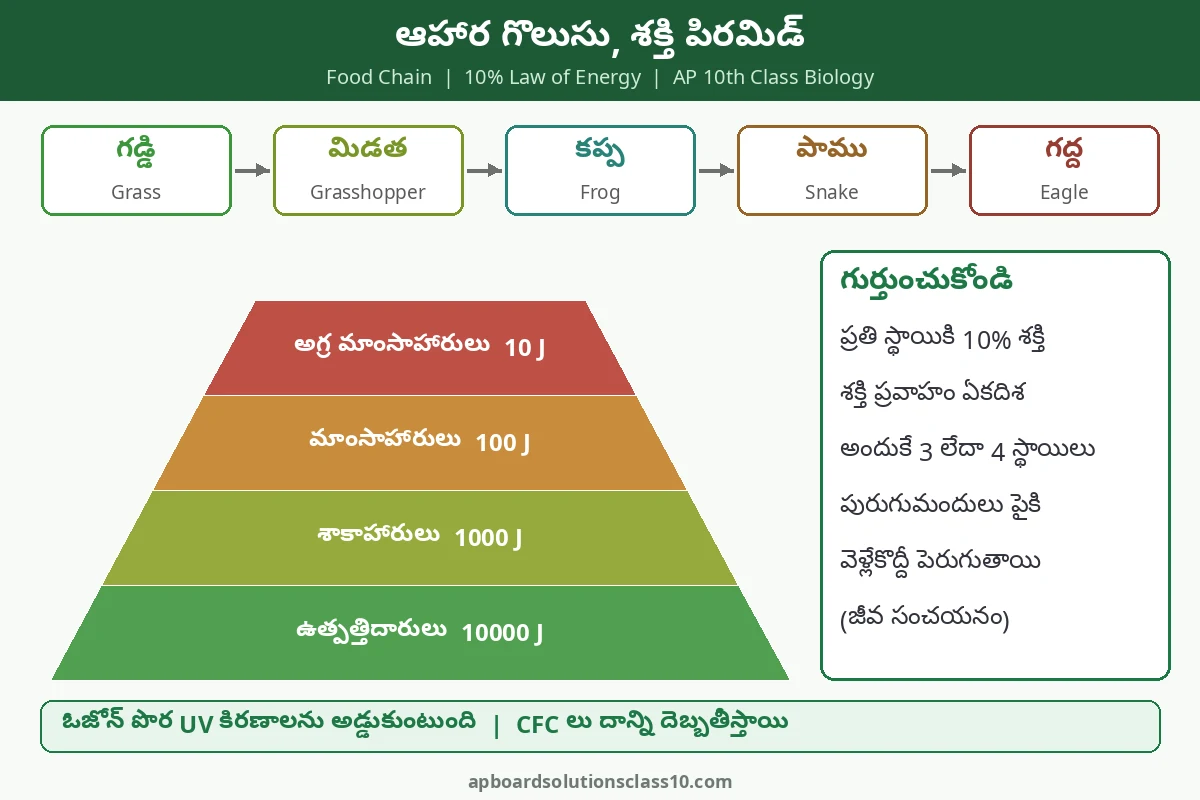
ఉదాహరణ ఆహార గొలుసు: గడ్డి, మిడత, కప్ప, పాము, గద్ద. ఒక పోషక స్థాయి నుంచి తర్వాతి స్థాయికి శక్తిలో సుమారు 10 శాతం మాత్రమే వెళ్తుంది; మిగతాది జీవక్రియల్లో, వేడిగా ఖర్చవుతుంది. అందుకే ఆహార గొలుసుల్లో సాధారణంగా 3 లేదా 4 స్థాయిలే ఉంటాయి. శక్తి ప్రవాహం ఒకే దిశలో (ఏకదిశ) జరుగుతుంది.
ఎన్నో ఆహార గొలుసులు ఒకదానితో ఒకటి కలిసి ఆహార జాలకం (food web) అవుతాయి. హానికర రసాయనాలు (ఉదా: పురుగుమందులు) జీర్ణం కాకుండా ప్రతి స్థాయిలో పోగుపడి, పైన ఉండే మనుషుల్లో ఎక్కువ సాంద్రతకు చేరతాయి. ఇదే జీవ సంచయనం.
ఓజోన్ పొర, వ్యర్థాల నిర్వహణ
ఓజోన్ (O3) మూడు ఆక్సిజన్ పరమాణువుల అణువు. వాతావరణం పై భాగంలో ఉండే ఓజోన్ పొర సూర్యుడి నుంచి వచ్చే హానికర అతినీలలోహిత (UV) కిరణాలను అడ్డుకుంటుంది. రిఫ్రిజిరేటర్లు, అగ్నిమాపక సాధనాల్లో వాడే CFC లు (క్లోరోఫ్లోరో కార్బన్లు) ఈ పొరను దెబ్బతీస్తాయి. 1987 లో UNEP ఒప్పందం ద్వారా CFC ఉత్పత్తిని 1986 స్థాయిలోనే నిలిపేయాలని దేశాలు అంగీకరించాయి.
AP 10th Class Our Environment Solutions — In-text Questions
పాఠం మధ్యలో వచ్చే ప్రశ్నలు. జవాబు చూడండి బటన్ నొక్కితే జవాబు కనిపిస్తుంది.
1. Why are some substances biodegradable and some non-biodegradable?
జవాబు చూడండి
తెలుగులో: సూక్ష్మజీవుల ఎంజైమ్లు పనిచేసే పదార్థాలు విచ్ఛిన్నమవుతాయి; పనిచేయని వాటిని అవి విడదీయలేవు.
2. Give any two ways in which biodegradable substances would affect the environment.
జవాబు చూడండి
(2) When they decompose properly, they return nutrients to the soil and make it fertile (for example, as compost).
తెలుగులో: ఎక్కువ పోగుపడితే దుర్వాసన, వ్యాధులు; సరిగ్గా కుళ్లితే నేలకు పోషకాలు.
3. Give any two ways in which non-biodegradable substances would affect the environment.
జవాబు చూడండి
(2) Harmful non-biodegradable chemicals such as pesticides enter food chains and accumulate in organisms at higher levels (biological magnification), harming animals and humans.
తెలుగులో: నేల, నీరు కలుషితం అవుతాయి; ఆహార గొలుసులో పోగుపడి హాని చేస్తాయి.
4. What are trophic levels? Give an example of a food chain and state the different trophic levels in it.
జవాబు చూడండి
Example: Grass, grasshopper, frog, snake, eagle.
First trophic level (producer): grass. Second (primary consumer, herbivore): grasshopper. Third (secondary consumer): frog. Fourth (tertiary consumer): snake. Fifth (top consumer): eagle.
తెలుగులో: ఆహార గొలుసులోని ఒక్కో మెట్టు ఒక పోషక స్థాయి; మొదటి స్థాయి ఎప్పుడూ ఉత్పత్తిదారు.
5. What is the role of decomposers in the ecosystem?
జవాబు చూడండి
తెలుగులో: విచ్ఛిన్నకారులు పోషకాలను మళ్లీ నేలకు చేర్చి, పరిసరాలను శుభ్రంగా ఉంచుతాయి.
6. What is ozone and how does it affect any ecosystem?
జవాబు చూడండి
తెలుగులో: పై వాతావరణంలోని ఓజోన్ పొర హానికర UV కిరణాలను అడ్డుకుని అన్ని జీవులనూ కాపాడుతుంది.
7. How can you help in reducing the problem of waste disposal? Give any two methods.
జవాబు చూడండి
(2) Reduce the use of plastic: carry cloth bags, and reuse and recycle materials such as paper, glass and metal.
తెలుగులో: చెత్తను వేరుచేయడం, ప్లాస్టిక్ తగ్గించడం, పునర్వినియోగం.
AP 10th Class Our Environment Solutions — Exercise Questions and Answers
పాఠం చివరి అభ్యాస ప్రశ్నలు. 1 నుంచి 3 బహుళైచ్ఛిక ప్రశ్నలు.
1. Which of the following groups contain only biodegradable items? (a) Grass, flowers and leather (b) Grass, wood and plastic (c) Fruit-peels, cake and lime-juice (d) Cake, wood and grass
జవాబు చూడండి
తెలుగులో: ప్లాస్టిక్ ఉన్న (b) తప్ప మిగతా మూడూ.
2. Which of the following constitute a food chain? (a) Grass, wheat and mango (b) Grass, goat and human (c) Goat, cow and elephant (d) Grass, fish and goat
జవాబు చూడండి
3. Which of the following are environment-friendly practices? (a) Carrying cloth-bags to put purchases in while shopping (b) Switching off unnecessary lights and fans (c) Walking to school instead of getting your mother to drop you on her scooter (d) All of the above
జవాబు చూడండి
4. What will happen if we kill all the organisms in one trophic level?
జవాబు చూడండి
తెలుగులో: ఒక స్థాయి పోతే దానిపై ఆధారపడినవి చనిపోతాయి, కింది స్థాయి విపరీతంగా పెరుగుతుంది.
5. Will the impact of removing all the organisms in a trophic level be different for different trophic levels? Can the organisms of any trophic level be removed without causing any damage to the ecosystem?
జవాబు చూడండి
తెలుగులో: ఉత్పత్తిదారులు పోతే మొత్తం వ్యవస్థ కూలిపోతుంది; ఏ స్థాయినీ నష్టం లేకుండా తీసేయలేం.
6. What is biological magnification? Will the levels of this magnification be different at different levels of the ecosystem?
జవాబు చూడండి
తెలుగులో: పై స్థాయికి వెళ్లేకొద్దీ రసాయనాల సాంద్రత పెరుగుతుంది; మనుషుల్లో అత్యధికం.
7. What are the problems caused by the non-biodegradable wastes that we generate?
జవాబు చూడండి
(2) Plastic wastes block drains and sewers, causing water-logging and breeding of mosquitoes.
(3) Animals that swallow plastic bags may choke and die.
(4) Harmful chemicals enter food chains and undergo biological magnification.
(5) They reduce soil fertility.
8. If all the waste we generate is biodegradable, will this have no impact on the environment?
జవాబు చూడండి
తెలుగులో: జీవ విచ్ఛిన్నమయ్యే వ్యర్థాలు కూడా ఎక్కువైతే దుర్వాసన, వ్యాధులు వస్తాయి.
9. Why is damage to the ozone layer a cause for concern? What steps are being taken to limit this damage?
జవాబు చూడండి
Steps: the damage is mainly caused by CFCs used in refrigerators and fire extinguishers. In 1987 the United Nations Environment Programme (UNEP) succeeded in getting an agreement to freeze CFC production at 1986 levels. Now CFC-free refrigerators are made, and the use of such chemicals is being phased out worldwide.
తెలుగులో: ఓజోన్ దెబ్బతింటే UV కిరణాలతో చర్మ క్యాన్సర్; CFC ల వాడకం తగ్గించడమే నివారణ.
10th Class Our Environment Important Questions
పాఠ్యపుస్తకం ప్రశ్నలు కాకుండా, పరీక్షల్లో తరచూ వచ్చే రూపంలో మేము తయారు చేసిన ప్రశ్నలు.
1 మార్కు ప్రశ్నలు
1. Which gas damages the ozone layer?
జవాబు చూడండి
2. What percentage of energy is passed on to the next trophic level?
జవాబు చూడండి
3. Name the organisms at the first trophic level.
జవాబు చూడండి
4. Give one example of a non-biodegradable substance.
జవాబు చూడండి
2 మార్కుల ప్రశ్నలు
1. Why is the flow of energy in an ecosystem said to be unidirectional?
జవాబు చూడండి
తెలుగులో: శక్తి ఎప్పుడూ కింది స్థాయి నుంచి పై స్థాయికే వెళ్తుంది, తిరిగి రాదు.
2. Why do food chains usually have only three or four trophic levels?
జవాబు చూడండి
తెలుగులో: 10 శాతం నియమం వల్ల పై స్థాయిలకు శక్తి చాలా తక్కువ మిగులుతుంది.
3. Differentiate between a food chain and a food web.
జవాబు చూడండి
తెలుగులో: ఆహార గొలుసు ఒక వరుస; ఆహార జాలకం చాలా గొలుసుల కలయిక.
4. Why are bacteria and fungi called decomposers? Write their importance.
జవాబు చూడండి
తెలుగులో: చనిపోయిన జీవులను సరళ పదార్థాలుగా మార్చి పోషకాలను తిరిగి నేలకు ఇస్తాయి.
4 మార్కుల ప్రశ్నలు
1. Explain the 10 percent law of energy flow with an example and an energy pyramid.
జవాబు చూడండి
తెలుగులో: పై చార్ట్లోని పిరమిడ్ (10000, 1000, 100, 10 J) ఇదే జవాబుకు చిత్రం.
2. What is biological magnification? Explain with an example.
జవాబు చూడండి
తెలుగులో: పురుగుమందు: నీరు, చిన్న జీవులు, చేపలు, పక్షులు, మనుషులు: పై స్థాయిలో సాంద్రత ఎక్కువ.
3. Suggest ways to manage garbage in our homes and towns.
జవాబు చూడండి
(2) Convert kitchen and garden waste into compost or use it for biogas.
(3) Reduce, reuse and recycle: avoid single-use plastic, carry cloth bags, recycle paper, glass and metal.
(4) Dispose of hazardous waste separately and avoid burning garbage in the open.
తెలుగులో: వేరుచేయడం, కంపోస్ట్, తగ్గించడం, పునర్వినియోగం, రీసైకిల్.
4. Write about the components of an ecosystem.
జవాబు చూడండి
(1) Abiotic (non-living) components: sunlight, temperature, rainfall, wind, soil and minerals.
(2) Biotic (living) components: producers (green plants that make food by photosynthesis), consumers (herbivores, carnivores, omnivores and parasites) and decomposers (bacteria and fungi that break down dead matter).
The biotic and abiotic components interact with each other, and energy and nutrients move through them.
తెలుగులో: నిర్జీవ అంశాలు, జీవ అంశాలు (ఉత్పత్తిదారులు, వినియోగదారులు, విచ్ఛిన్నకారులు).
Our Environment క్విజ్ — 10 ప్రశ్నలు
జవాబు చూసి, మీది సరైతేనే టిక్ పెట్టండి. కింది బార్లో 10 కి మీ స్కోర్ కనిపిస్తుంది.
1. Which group contains a non-biodegradable item?
(A) grass, flowers, leather (B) grass, wood, plastic (C) fruit-peels, cake, lime-juice (D) cake, wood, grass [1 మార్కు]
జవాబు చూడండి
2. Which of these is a food chain?
(A) grass, wheat, mango (B) grass, goat, human (C) goat, cow, elephant (D) grass, fish, goat [1 మార్కు]
జవాబు చూడండి
3. Energy passed to the next trophic level is about:
(A) 1% (B) 10% (C) 50% (D) 90% [1 మార్కు]
జవాబు చూడండి
4. Organisms of the first trophic level are:
(A) herbivores (B) producers (C) carnivores (D) decomposers [1 మార్కు]
జవాబు చూడండి
5. Ozone layer protects us from:
(A) infrared rays (B) UV radiation (C) visible light (D) radio waves [1 మార్కు]
జవాబు చూడండి
6. The ozone layer is damaged mainly by:
(A) CO2 (B) CFCs (C) oxygen (D) nitrogen [1 మార్కు]
జవాబు చూడండి
7. Highest concentration of pesticides is found in:
(A) producers (B) herbivores (C) top consumers (D) decomposers [1 మార్కు]
జవాబు చూడండి
8. Bacteria and fungi are:
(A) producers (B) consumers (C) decomposers (D) parasites only [1 మార్కు]
జవాబు చూడండి
9. Flow of energy in an ecosystem is:
(A) bidirectional (B) unidirectional (C) circular (D) random [1 మార్కు]
జవాబు చూడండి
10. Which is an environment-friendly practice?
(A) carrying cloth bags (B) switching off unused lights (C) walking to school (D) all of these [1 మార్కు]
జవాబు చూడండి
ఈ పాఠంలో మార్కులు ఎక్కడ పోతాయి
- అభ్యాస ప్రశ్న 1 లో ఒక్క జవాబే రాయడం. ప్లాస్టిక్ ఉన్న (b) తప్ప (a), (c), (d) మూడూ సరైనవే.
- ఆహార గొలుసును ఉత్పత్తిదారు (మొక్క) తో మొదలుపెట్టకపోవడం.
- శక్తి ప్రవాహం రెండు దిశల్లో జరుగుతుందని రాయడం. శక్తి ప్రవాహం ఏకదిశ.
- జీవ సంచయనంలో రసాయనాల సాంద్రత పై స్థాయిలో తక్కువ అని తారుమారు చేయడం. పై స్థాయిలోనే ఎక్కువ.
- ఓజోన్ పొర UV కిరణాలను అడ్డుకుంటుందని రాసి, CFC లు దాన్ని దెబ్బతీస్తాయనే కారణం రాయకపోవడం.
తర్వాత ఏం చదవాలి
- AP 10th Class Heredity Solutions — నాలుగో పాఠం జవాబులు
- AP 10th Class Life Processes Solutions — మొదటి పాఠం జవాబులు
- 10th Class Biology Important Diagrams in Telugu — అన్ని చిత్రాలు పేర్లతో
- AP 10th Class Biology Blueprint 2027 — ఏ పాఠానికి ఎన్ని మార్కులు
- AP 10th Class SA1 Biology Question Paper 2026-27 — SA1 సాధన పేపర్
FAQs
AP 10th Class Our Environment పాఠం ఏ నెలలో చెబుతారు?
AP SCERT నెలవారీ సిలబస్ ప్రకారం నవంబర్లో. పదో తరగతి జీవశాస్త్రంలో ఇది ఐదో, చివరి పాఠం.
ఈ పాఠం SA1 లో ఉంటుందా?
లేదు. SA1 జీవశాస్త్రంలో మొదటి నాలుగు పాఠాలే ఉన్నాయి. ఇది తర్వాతి పరీక్షలకు, SSC 2027 కు ముఖ్యం.
పోషక స్థాయి అంటే ఏమిటి?
ఆహార గొలుసులో శక్తి బదిలీ అయ్యే ఒక్కో మెట్టు. మొదటి స్థాయి ఉత్పత్తిదారులు, తర్వాత శాకాహారులు, మాంసాహారులు.
10 శాతం నియమం అంటే ఏమిటి?
ఒక పోషక స్థాయి నుంచి తర్వాతి స్థాయికి శక్తిలో సుమారు 10 శాతం మాత్రమే చేరుతుంది.
జీవ సంచయనం అంటే ఏమిటి?
పురుగుమందుల వంటి హానికర రసాయనాలు ఆహార గొలుసులో పై స్థాయిలకు వెళ్లేకొద్దీ ఎక్కువగా పోగుపడటం.
ఓజోన్ పొర ఎందుకు ముఖ్యం?
సూర్యుడి నుంచి వచ్చే హానికర UV కిరణాలను అడ్డుకుంటుంది. అది దెబ్బతింటే చర్మ క్యాన్సర్ వంటి సమస్యలు వస్తాయి.
జీవ విచ్ఛిన్నం కాని వ్యర్థాలు ఏవి?
ప్లాస్టిక్, పాలిథీన్, గాజు, DDT వంటి రసాయనాలు, లోహపు డబ్బాలు.
ఇంట్లో చెత్తను ఎలా తగ్గించవచ్చు?
చెత్తను వేరుచేయడం, వంటింటి వ్యర్థాలతో కంపోస్ట్, బట్ట సంచులు వాడటం, పునర్వినియోగం.
ఈ పాఠంలో ఏ చిత్రాలు ముఖ్యం?
ఆహార గొలుసు, ఆహార జాలకం, శక్తి పిరమిడ్ (10 శాతం నియమం).
పదో తరగతి జీవశాస్త్రం అన్ని పాఠాల జవాబులు ఎక్కడ?
ఐదు పాఠాల జవాబుల పేజీలు ఇప్పుడు పూర్తయ్యాయి. మొదటి పాఠం Life Processes Solutions నుంచి మొదలుపెట్టండి; ప్రతి పేజీ కింద మిగతా పాఠాల లింకులు ఉన్నాయి.
Official Sources
పాఠాల క్రమం, నెలవారీ ప్రణాళిక: AP SCERT 2026-27 నెలవారీ సిలబస్, పాఠశాల విద్యాశాఖ ఆంధ్రప్రదేశ్. పాఠ్యపుస్తకాలు పాఠశాల విద్యాశాఖ సైట్లో లభిస్తాయి. జవాబులు మా సొంత మాటల్లో రాశాం.