AP 10th Class Carbon and its Compounds Solutions — పదో తరగతి భౌతిక శాస్త్రం నాలుగో పాఠం (కార్బన్, దాని సమ్మేళనాలు) లోని అన్ని పాఠ్యపుస్తకం ప్రశ్నలకు జవాబులు. 13 In-text ప్రశ్నలు, 15 అభ్యాస ప్రశ్నలు, పరీక్షకు ముఖ్యమైన 1, 2, 4 మార్కుల ప్రశ్నలు, 10 ప్రశ్నల క్విజ్ ఒకే పేజీలో ఉన్నాయి.
ప్రతి జవాబు పరీక్షలో రాసే విధంగా ఇంగ్లీష్లో, కింద తెలుగు వివరణతో ఉంటుంది. క్రియాత్మక సమూహాలు, నామకరణం, ఇథనాల్, ఇథనోయిక్ ఆమ్లం, సబ్బుల శుభ్రపరిచే చర్య పట్టికలుగా, చార్ట్గా ఇచ్చాం. రసాయన శాస్త్రంలో ఇదే చివరి పాఠం. ముందు పాఠాల జవాబులు Chemical Reactions and Equations, Acids Bases and Salts, Metals and Non-metals లో ఉన్నాయి.
Physics పాఠాల జవాబులు వచ్చిన వెంటనే లింక్ రావాలంటే WhatsApp గ్రూప్లో చేరండి
ఈ పేజీలో: పాఠంలో ఏముంది | క్రియాత్మక సమూహాలు | ఇథనాల్ vs ఇథనోయిక్ ఆమ్లం | In-text ప్రశ్నలు | అభ్యాస ప్రశ్నలు 1-15 | ముఖ్య ప్రశ్నలు | క్విజ్ | మార్కులు పోయే చోట్లు | FAQs
AP 10th Class Carbon and its Compounds Solutions — పాఠంలో ఏముంది
AP SCERT ఉపాధ్యాయ కరదీపిక ప్రకారం ఈ పాఠం అక్టోబర్లో చెబుతారు. ఎలక్ట్రాన్ చుక్కల నిర్మాణాలు, నామకరణం, రసాయన చర్యల సమీకరణాలు, సబ్బు మిసెల్ చిత్రం ఈ పాఠం నుంచి ఎక్కువగా అడుగుతారు.
| విభాగం | అంశం |
|---|---|
| 4.1 | కార్బన్లో బంధం: సమయోజనీయ బంధం, కార్బన్ రూపాంతరాలు |
| 4.2 | కార్బన్ బహుముఖ స్వభావం: శృంఖలీకరణం, చతుర్సంయోజకత, సంతృప్త, అసంతృప్త సమ్మేళనాలు, క్రియాత్మక సమూహాలు, సమజాత శ్రేణి, నామకరణం |
| 4.3 | రసాయన ధర్మాలు: దహనం, ఆక్సీకరణం, సంకలనం, ప్రతిక్షేపణ చర్యలు |
| 4.4 | ముఖ్య సమ్మేళనాలు: ఇథనాల్, ఇథనోయిక్ ఆమ్లం |
| 4.5 | సబ్బులు, డిటర్జెంట్లు |
పాఠం నోట్స్ తెలుగులో 10th Class Chemistry Chapter 4 Notes in Telugu లో ఉన్నాయి.
క్రియాత్మక సమూహాలు, హైడ్రోకార్బన్ల రకాలు
సమ్మేళనం పేరు చివరి భాగం (suffix) చూసి క్రియాత్మక సమూహం చెప్పొచ్చు: -ol అయితే ఆల్కహాల్, -al అయితే ఆల్డిహైడ్, -one అయితే కీటోన్, -oic acid అయితే కార్బాక్సిలిక్ ఆమ్లం.
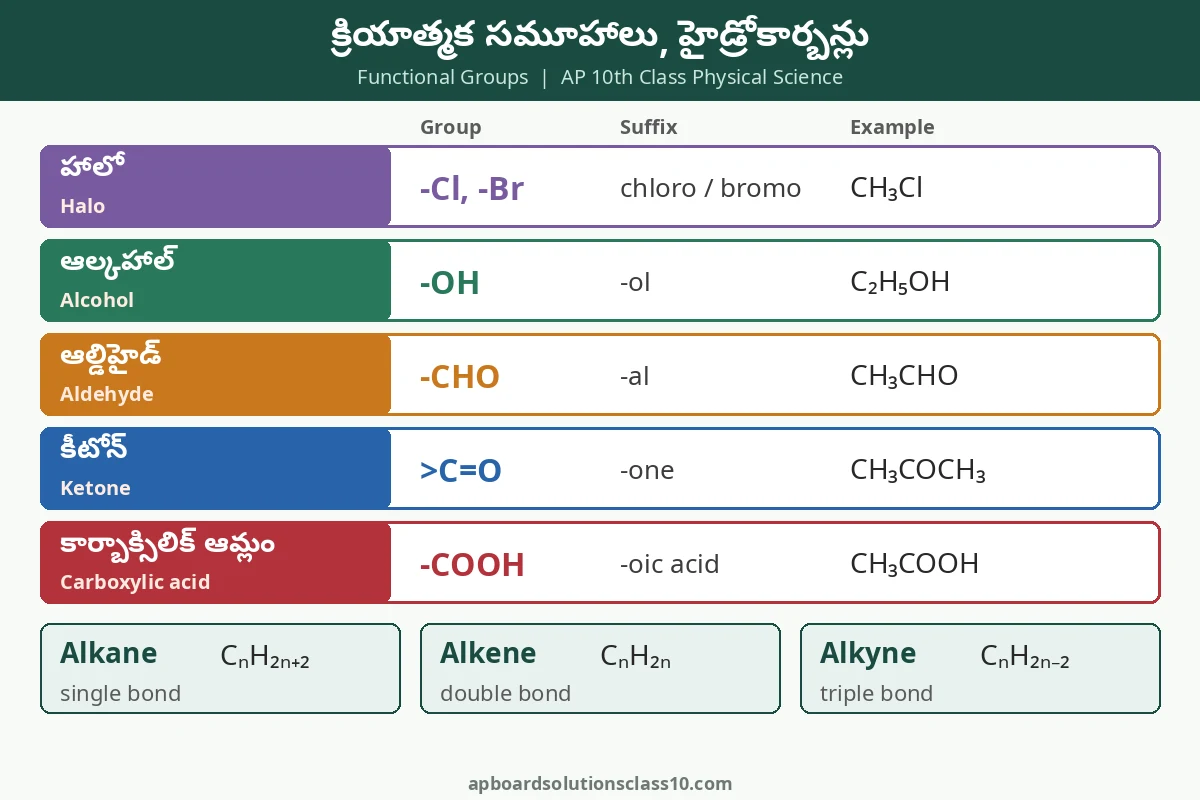
| క్రియాత్మక సమూహం | సూత్రం | ఉదాహరణ |
|---|---|---|
| హాలో (Halo) | −Cl, −Br | CH3Cl క్లోరోమీథేన్ |
| ఆల్కహాల్ | −OH | C2H5OH ఇథనాల్ |
| ఆల్డిహైడ్ | −CHO | CH3CHO ethanal (ఎసిటాల్డిహైడ్) |
| కీటోన్ | >C=O | CH3COCH3 ప్రొపనోన్ |
| కార్బాక్సిలిక్ ఆమ్లం | −COOH | CH3COOH ఇథనోయిక్ ఆమ్లం |
| రకం | సాధారణ సూత్రం | ఉదాహరణ |
|---|---|---|
| ఆల్కేన్ (ఏక బంధం) | CnH2n+2 | CH4, C2H6 |
| ఆల్కీన్ (ద్విబంధం) | CnH2n | C2H4, C3H6 |
| ఆల్కైన్ (త్రిబంధం) | CnH2n−2 | C2H2, C3H4 |
ఇథనాల్, ఇథనోయిక్ ఆమ్లం — తేడాలు
| ధర్మం | ఇథనాల్ | ఇథనోయిక్ ఆమ్లం |
|---|---|---|
| సూత్రం | C2H5OH | CH3COOH |
| వాసన | తీయని వాసన | వెనిగర్ వాసన |
| లిట్మస్ | రంగు మారదు | నీలి లిట్మస్ ఎరుపు |
| NaHCO3 తో | చర్య లేదు | CO2 బుడగలు |
| ద్రవీభవన స్థానం | చాలా తక్కువ | 290 K, చలికాలంలో గడ్డకడుతుంది (గ్లేసియల్) |
AP 10th Class Carbon and its Compounds Solutions — In-text Questions
1. What would be the electron dot structure of carbon dioxide (CO2)?
జవాబు చూడండి
తెలుగులో: కార్బన్ ప్రతి ఆక్సిజన్తో రెండు జతల ఎలక్ట్రాన్లు పంచుకుంటుంది. చిత్రంలో మధ్య C, రెండు వైపులా O, మధ్యలో నాలుగేసి చుక్కలు.
2. What would be the electron dot structure of a molecule of sulphur made up of eight atoms of sulphur?
జవాబు చూడండి
3. How many structural isomers can you draw for pentane (C5H12)?
జవాబు చూడండి
తెలుగులో: ఒకే అణుసూత్రం, వేర్వేరు నిర్మాణాలు ఉన్న సమ్మేళనాలు నిర్మాణ సాదృశ్యకాలు (isomers).
4. What are the two properties of carbon which lead to the huge number of carbon compounds?
జవాబు చూడండి
తెలుగులో: శృంఖలీకరణం, చతుర్సంయోజకత.
5. What will be the formula and electron dot structure of cyclopentane?
జవాబు చూడండి
6. Draw the structures of: (i) ethanoic acid (ii) bromopentane (iii) butanone (iv) hexanal. Are structural isomers possible for bromopentane?
జవాబు చూడండి
(ii) CH3–CH2–CH2–CH2–CH2–Br
(iii) CH3–CO–CH2–CH3
(iv) CH3–CH2–CH2–CH2–CH2–CHO
Yes. The bromine atom can be on carbon 1, 2 or 3 of the chain, and the chain can also be branched, so bromopentane has several isomers.
7. Name the following: (i) CH3–CH2–Br (ii) HCHO (iii) CH≡C–CH2–CH2–CH2–CH3
జవాబు చూడండి
తెలుగులో: కార్బన్ల సంఖ్యకు పూర్వపదం (meth-1, eth-2, prop-3, but-4, pent-5, hex-6), బంధం లేదా సమూహానికి చివరి పదం.
8. Why is the conversion of ethanol to ethanoic acid an oxidation reaction?
జవాబు చూడండి
CH3CH2OH → CH3COOH (with alkaline KMnO4 + heat)
9. A mixture of oxygen and ethyne is burnt for welding. Why is a mixture of ethyne and air not used?
జవాబు చూడండి
10. How would you distinguish experimentally between an alcohol and a carboxylic acid?
జవాబు చూడండి
CH3COOH + NaHCO3 → CH3COONa + H2O + CO2
11. What are oxidising agents?
జవాబు చూడండి
12. Would you be able to check whether water is hard by using a detergent?
జవాబు చూడండి
13. People use a variety of methods to wash clothes. Why is it necessary to agitate them to get clean clothes?
జవాబు చూడండి
AP 10th Class Carbon and its Compounds Solutions — Exercise Questions and Answers
పాఠం చివరి 15 అభ్యాస ప్రశ్నలు. 1 నుంచి 3 బహుళైచ్ఛిక ప్రశ్నలు.
1. Ethane, with the molecular formula C2H6, has: (a) 6 covalent bonds (b) 7 covalent bonds (c) 8 covalent bonds (d) 9 covalent bonds
జవాబు చూడండి
2. Butanone is a four-carbon compound with the functional group: (a) carboxylic acid (b) aldehyde (c) ketone (d) alcohol
జవాబు చూడండి
3. While cooking, if the bottom of the vessel is getting blackened on the outside, it means that: (a) the food is not cooked completely (b) the fuel is not burning completely (c) the fuel is wet (d) the fuel is burning completely
జవాబు చూడండి
తెలుగులో: స్టవ్ గాలి రంధ్రాలు మూసుకుపోతే ఇలా జరుగుతుంది.
4. Explain the nature of the covalent bond using the bond formation in CH3Cl.
జవాబు చూడండి
5. Draw the electron dot structures for: (a) ethanoic acid (b) H2S (c) propanone (d) F2
జవాబు చూడండి
(b) H2S: sulphur shares one pair with each hydrogen and keeps two lone pairs.
(c) Propanone: the middle carbon has a double bond with oxygen and single bonds with two CH3 groups.
(d) F2: the two fluorine atoms share one pair (single bond); each keeps three lone pairs.
తెలుగులో: పరీక్షలో పంచుకున్న జతలను రెండు అణువుల మధ్య, మిగిలిన ఎలక్ట్రాన్లను అణువు చుట్టూ చుక్కలుగా చూపించాలి.
6. What is a homologous series? Explain with an example.
జవాబు చూడండి
తెలుగులో: వరుస సభ్యుల మధ్య తేడా ఎప్పుడూ CH2.
7. How can ethanol and ethanoic acid be differentiated on the basis of their physical and chemical properties?
జవాబు చూడండి
Chemical: ethanoic acid turns blue litmus red and gives CO2 with sodium hydrogencarbonate; ethanol does neither.
తెలుగులో: పై “ఇథనాల్ vs ఇథనోయిక్ ఆమ్లం” పట్టిక చూడండి.
8. Why does micelle formation take place when soap is added to water? Will a micelle be formed in other solvents such as ethanol also?
జవాబు చూడండి
9. Why are carbon and its compounds used as fuels for most applications?
జవాబు చూడండి
10. Explain the formation of scum when hard water is treated with soap.
జవాబు చూడండి
11. What change will you observe if you test soap with litmus paper (red and blue)?
జవాబు చూడండి
12. What is hydrogenation? What is its industrial application?
జవాబు చూడండి
తెలుగులో: ద్రవ నూనెలు ఘన వనస్పతిగా మారతాయి.
13. Which of the following hydrocarbons undergo addition reactions: C2H6, C3H8, C3H6, C2H2 and CH4?
జవాబు చూడండి
తెలుగులో: అసంతృప్త సమ్మేళనాలు మాత్రమే సంకలన చర్యలు జరుపుతాయి.
14. Give a test that can be used to differentiate between saturated and unsaturated hydrocarbons.
జవాబు చూడండి
15. Explain the mechanism of the cleaning action of soaps.
జవాబు చూడండి
తెలుగులో: మిసెల్ చిత్రంలో తోక లోపల (నూనె వైపు), తల బయట (నీటి వైపు) చూపించాలి.
10th Class Carbon and its Compounds Important Questions
పాఠ్యపుస్తకం ప్రశ్నలు కాకుండా, పరీక్షల్లో తరచూ వచ్చే రూపంలో మేము తయారు చేసిన ప్రశ్నలు.
1 మార్కు ప్రశ్నలు
1. Name any two allotropes of carbon.
జవాబు చూడండి
2. What is the general formula of alkenes?
జవాబు చూడండి
3. What is the IUPAC name of CH3COOH?
జవాబు చూడండి
4. What is glacial acetic acid?
జవాబు చూడండి
5. Which gas is evolved when sodium reacts with ethanol?
జవాబు చూడండి
2 మార్కుల ప్రశ్నలు
1. What is esterification? Write the equation.
జవాబు చూడండి
2. What is saponification?
జవాబు చూడండి
3. What is a substitution reaction? Give an example.
జవాబు చూడండి
4. What happens when ethanol is heated with excess concentrated sulphuric acid at 443 K?
జవాబు చూడండి
4 మార్కుల ప్రశ్నలు
1. Explain the cleaning action of soap with a neat diagram of a micelle.
జవాబు చూడండి
తెలుగులో: చిత్రంలో నూనె బిందువు, దాని చుట్టూ తోకలు లోపలికి, తలలు బయటకు ఉండేలా గీసి పేర్లు రాయండి.
2. Write three chemical reactions of ethanol with equations.
జవాబు చూడండి
(2) Dehydration with hot conc. H2SO4: CH3CH2OH → CH2=CH2 + H2O
(3) Oxidation with alkaline KMnO4: CH3CH2OH → CH3COOH
3. Write four differences between soaps and detergents.
జవాబు చూడండి
Carbon and its Compounds క్విజ్ — 10 ప్రశ్నలు
జవాబు చూసి, మీది సరైతేనే టిక్ పెట్టండి. కింది బార్లో 10 కి మీ స్కోర్ కనిపిస్తుంది.
1. Number of covalent bonds in ethane (C2H6):
(A) 6 (B) 7 (C) 8 (D) 9 [1 మార్కు]
జవాబు చూడండి
2. The functional group in butanone is:
(A) alcohol (B) aldehyde (C) ketone (D) carboxylic acid [1 మార్కు]
జవాబు చూడండి
3. General formula of alkynes:
(A) CnH2n+2 (B) CnH2n (C) CnH2n−2 (D) CnHn [1 మార్కు]
జవాబు చూడండి
4. Successive members of a homologous series differ by:
(A) CH (B) CH2 (C) CH3 (D) CH4 [1 మార్కు]
జవాబు చూడండి
5. Which undergoes an addition reaction?
(A) CH4 (B) C2H6 (C) C2H4 (D) C3H8 [1 మార్కు]
జవాబు చూడండి
6. Vegetable oil is converted into vanaspati ghee by:
(A) oxidation (B) hydrogenation (C) substitution (D) esterification [1 మార్కు]
జవాబు చూడండి
7. Sweet-smelling compounds formed from an acid and an alcohol:
(A) esters (B) ketones (C) aldehydes (D) alkanes [1 మార్కు]
జవాబు చూడండి
8. Hard water forms scum with:
(A) detergent (B) soap (C) ethanol (D) vinegar [1 మార్కు]
జవాబు చూడండి
9. Ethanoic acid reacts with sodium hydrogencarbonate to give:
(A) H2 (B) O2 (C) CO2 (D) Cl2 [1 మార్కు]
జవాబు చూడండి
10. The property of carbon to form long chains is called:
(A) tetravalency (B) catenation (C) isomerism (D) oxidation [1 మార్కు]
జవాబు చూడండి
ఈ పాఠంలో మార్కులు ఎక్కడ పోతాయి
- ఎలక్ట్రాన్ చుక్కల నిర్మాణంలో ఒంటరి జతలు (lone pairs) చూపించకపోవడం.
- ఇథేన్లో 6 బంధాలు అని రాయడం. C–C బంధం కూడా లెక్కించాలి, మొత్తం 7.
- ethanol (ఆల్కహాల్, −OH), ethanal (ఆల్డిహైడ్, −CHO) పేర్లు, సూత్రాలు కలిపేయడం. ఒక్క అక్షరం తేడా, సమూహం వేరు.
- సంతృప్త హైడ్రోకార్బన్లు సంకలన చర్యలు జరుపుతాయని రాయడం. అసంతృప్తవి మాత్రమే జరుపుతాయి.
- మిసెల్ చిత్రంలో తల, తోక స్థానాలు తారుమారు చేయడం. తోక నూనె వైపు, తల నీటి వైపు.
తర్వాత ఏం చదవాలి
- AP 10th Class Metals and Non-metals Solutions — పాఠం 3 జవాబులు
- 10th Class Chemistry Chemical Equations in Telugu — అన్ని రసాయన శాస్త్ర సమీకరణాలు
- 10th Class Physics Formulas in Telugu — తర్వాత వచ్చే Physics పాఠాలకు సూత్రాలు
- AP 10th Class SA1 Physical Science Question Paper 2026-27 — SA1 సాధన పేపర్
FAQs
AP 10th Class Carbon and its Compounds పాఠం ఏ నెలలో చెబుతారు?
AP SCERT ఉపాధ్యాయ కరదీపిక ప్రకారం అక్టోబర్లో. భౌతిక శాస్త్రంలోని రసాయన శాస్త్ర భాగంలో ఇది చివరి పాఠం.
ఈ పాఠంలో ఎన్ని ప్రశ్నలు ఉన్నాయి?
పాఠం చివర 15 అభ్యాస ప్రశ్నలు, పాఠం మధ్యలో 13 In-text ప్రశ్నలు. అన్నింటికీ జవాబులు ఈ పేజీలో ఉన్నాయి.
సమయోజనీయ బంధం అంటే ఏమిటి?
రెండు అణువులు ఎలక్ట్రాన్ జతలను పంచుకోవడం వల్ల ఏర్పడే బంధం. కార్బన్ సమ్మేళనాల్లో ఎక్కువగా ఇదే బంధం ఉంటుంది.
సంతృప్త, అసంతృప్త హైడ్రోకార్బన్ల తేడా?
సంతృప్తవాటిలో కార్బన్ల మధ్య ఏక బంధాలు మాత్రమే (ఆల్కేన్లు). అసంతృప్తవాటిలో ద్విబంధం లేదా త్రిబంధం ఉంటుంది (ఆల్కీన్లు, ఆల్కైన్లు).
నామకరణం ఎలా చేయాలి?
కార్బన్ల సంఖ్యకు పూర్వపదం (meth, eth, prop, but, pent, hex), బంధం లేదా క్రియాత్మక సమూహానికి చివరి పదం (-ane, -ene, -yne, -ol, -al, -one, -oic acid).
సబ్బులు, డిటర్జెంట్లలో ఏది మంచిది?
కఠిన జలంలో డిటర్జెంట్లు బాగా పనిచేస్తాయి. కానీ చాలా డిటర్జెంట్లు సహజంగా విఘటనం చెందవు, సబ్బులు చెందుతాయి.
మిసెల్ అంటే ఏమిటి?
నీటిలో సబ్బు అణువులు తోకలు లోపలికి, తలలు బయటకు ఉండేలా ఏర్పరిచే గుండ్రని సమూహం. దాని మధ్యలో నూనె మురికి చిక్కుకుంటుంది.
ఈ జవాబులు తెలుగు మీడియం విద్యార్థులకు పనికొస్తాయా?
అవును. ప్రతి జవాబు కింద తెలుగు వివరణ ఉంది. సూత్రాలు, నిర్మాణాలు రెండు మీడియంలలోనూ ఒకటే.
SA1 లో ఈ పాఠం వస్తుందా?
ఇది అక్టోబర్ పాఠం. SA1 లో ఏ పాఠాలు ఉంటాయో AP SA1 Syllabus 2026-27 పేజీలో చూడండి. SSC పరీక్షకు ఈ పాఠం తప్పనిసరి.
తర్వాతి పాఠం జవాబులు ఎప్పుడు?
రసాయన శాస్త్రం భాగం ఇంతటితో పూర్తయింది. తర్వాత Physics పాఠం Light – Reflection and Refraction జవాబుల పేజీ వస్తుంది.
Official Sources
పాఠాల జాబితా, నెలవారీ ప్రణాళిక: AP SCERT పదో తరగతి భౌతిక శాస్త్రం ఉపాధ్యాయ కరదీపిక (Teacher’s Handbook), పాఠశాల విద్యాశాఖ ఆంధ్రప్రదేశ్. పాఠ్యపుస్తకాలు పాఠశాల విద్యాశాఖ సైట్లో లభిస్తాయి. జవాబులు మా సొంత మాటల్లో రాశాం.